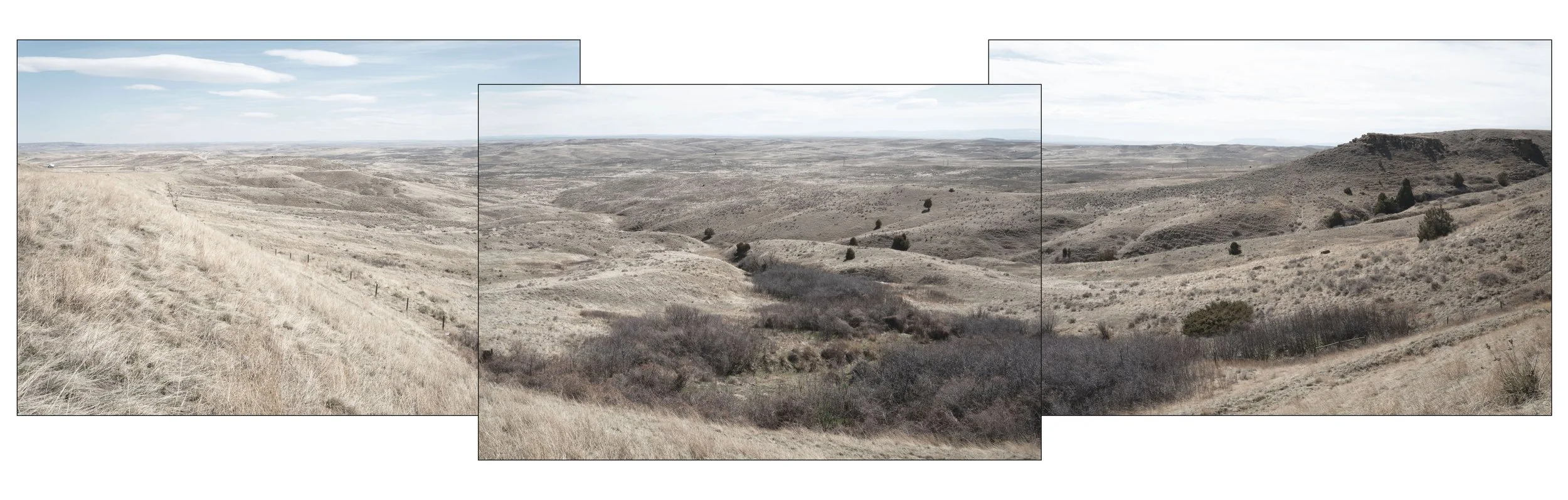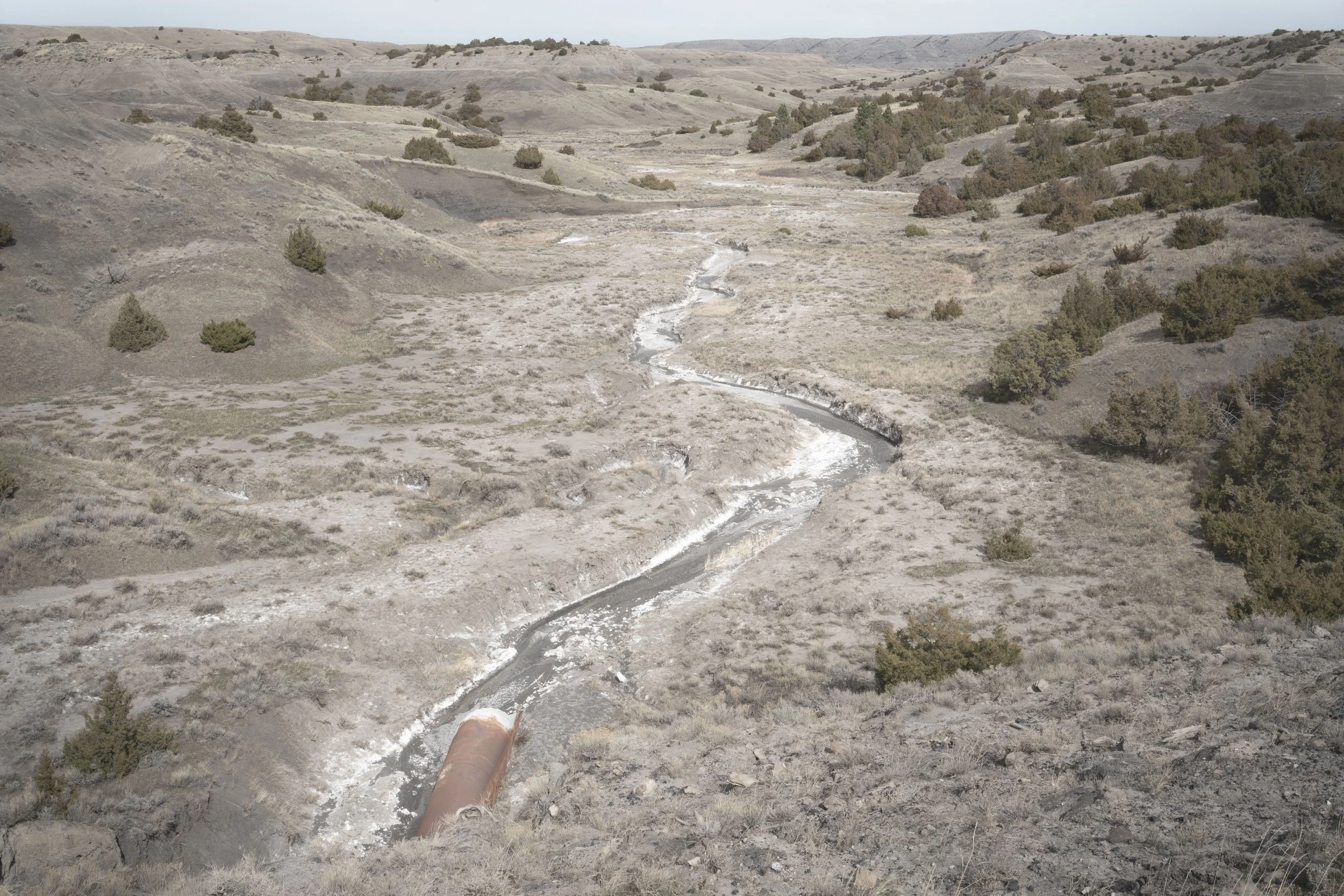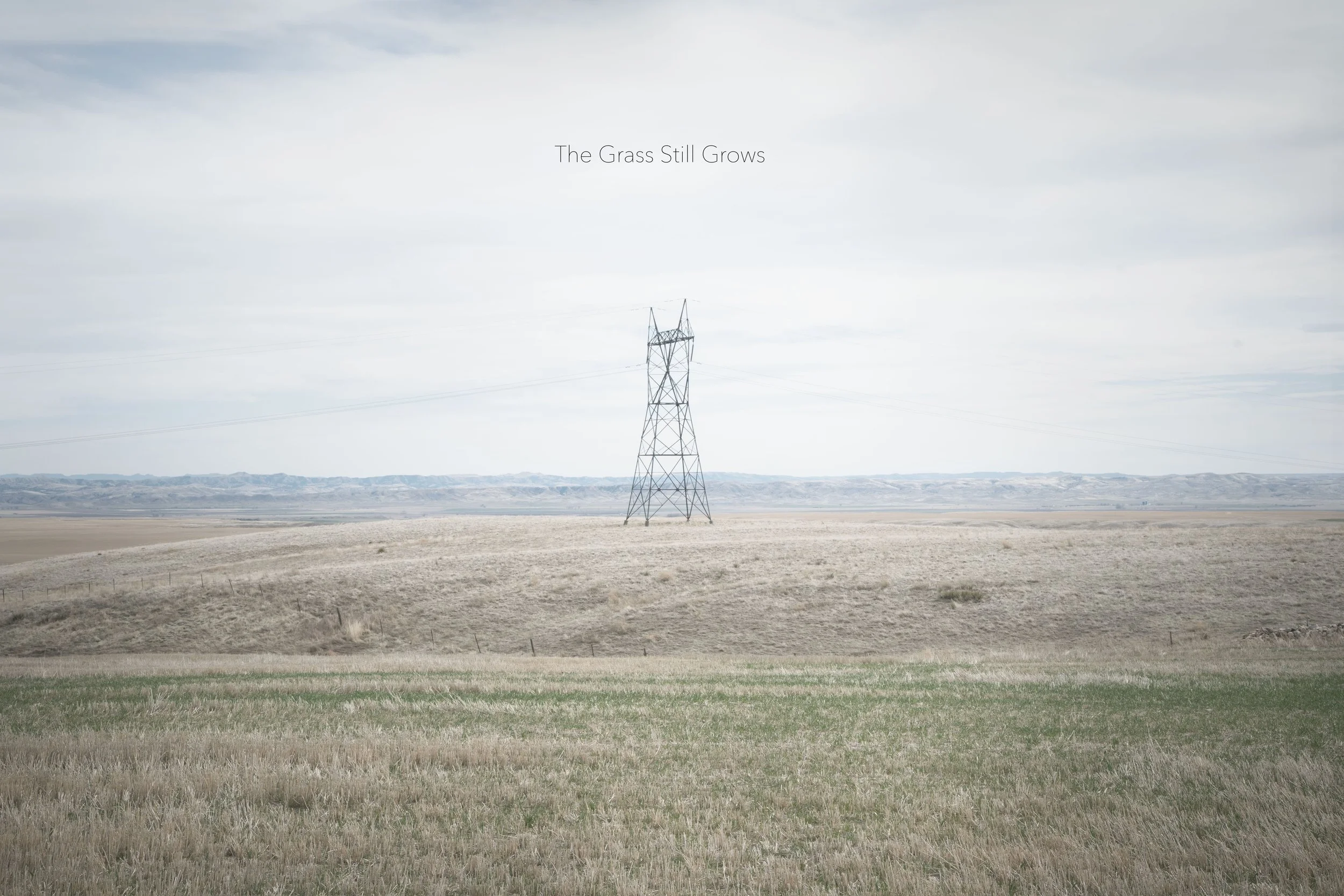
In the expansive grasslands of Southern Montana lies the Apsáalooke (Crow) Nation — a territory reduced to roughly 1.7% of its original size. From the Yellowtail Dam to the encroaching dominance of a colonial ranching industry, this landscape is thick with echoes of dispossession, both past and present. As the Earth warms, drought conditions worsen, and agricultural land declines; this land grows more contested. Broken promises from centuries past that their land would be theirs forever — "as long as the grass grows or the water runs" maintain ironic relevance. In the Bighorn valley, the water is dammed, but for now, the grass still grows.
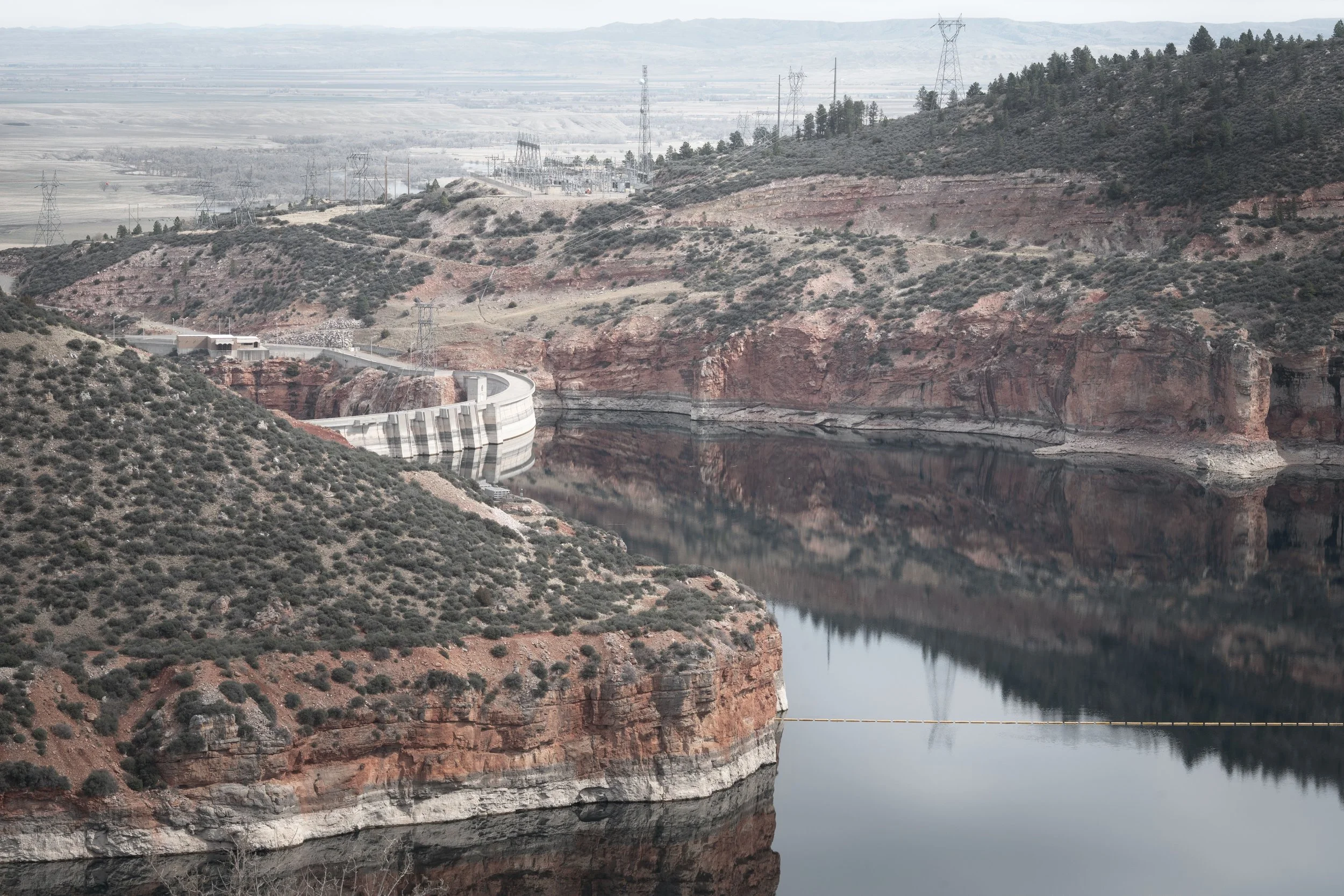
| The Yellowtail Dam |
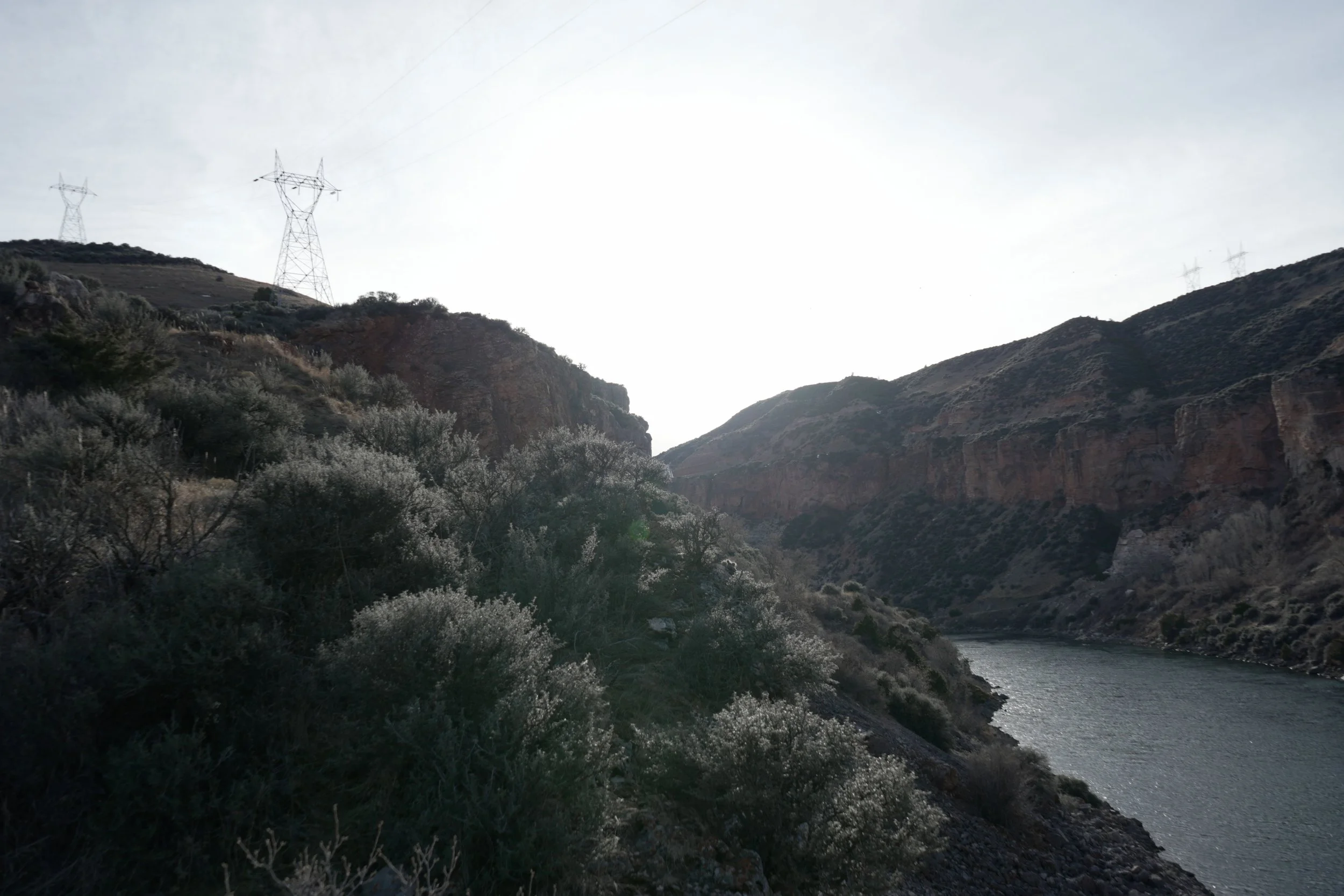
Completed in 1967, the Yellowtail Dam flooded the sacred Bighorn Canyon and the productive river bottom land along it, displacing Apsáalooke families. In compensation, the Apsáalooke received 2.5 million dollars for land that has since generated an estimated 90 to 175 million dollars per year in hydroelectric power alone, for nearly sixty years. Today, the dam’s water irrigates non-Native fields, its hydropower is sold by the federal government outside the reservation, and its tourism revenue bypasses the Apsáalooke almost entirely. In a final cruelty, the dam was named after Robert Yellowtail, the Apsáalooke leader who fought longest and hardest to stop it.
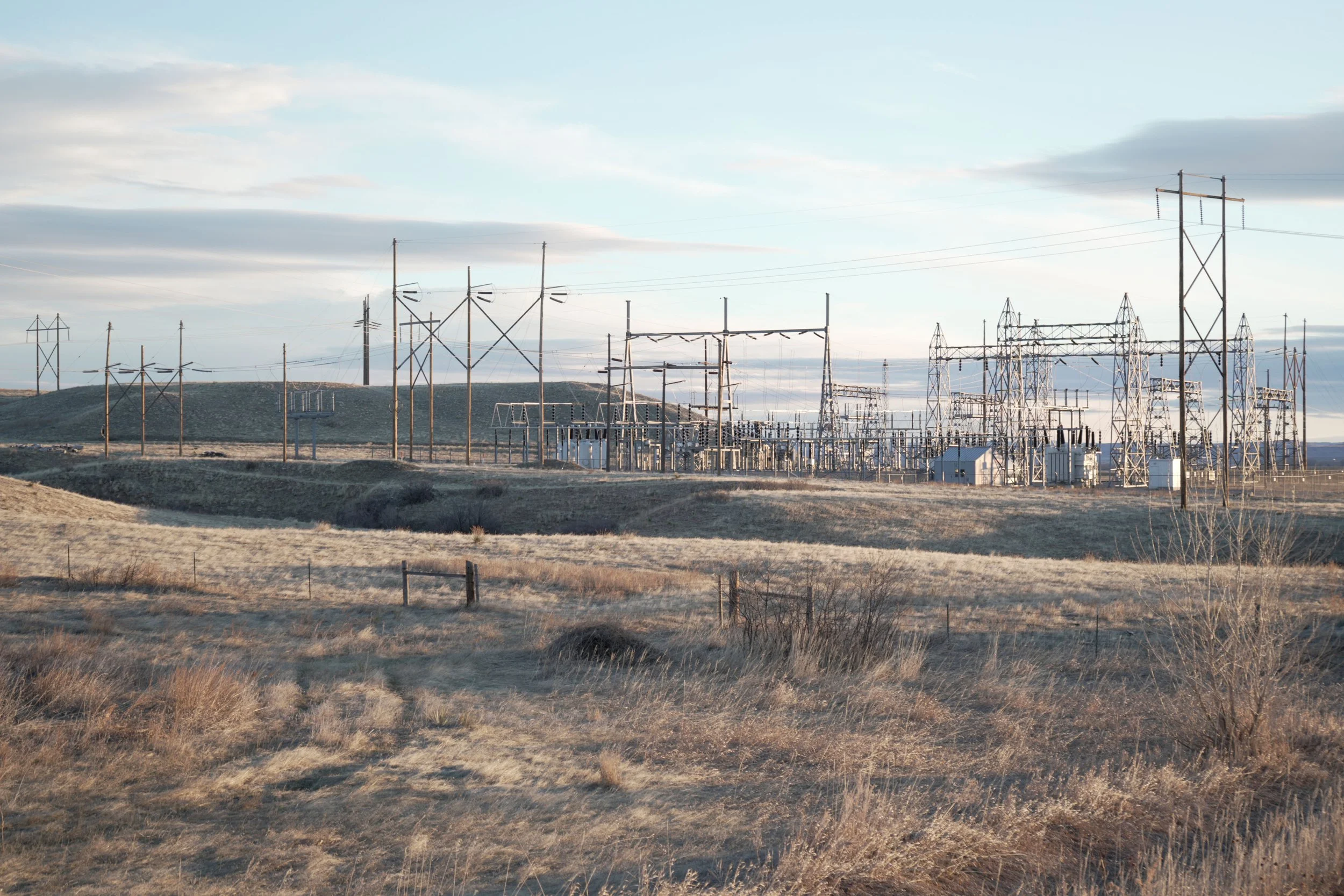
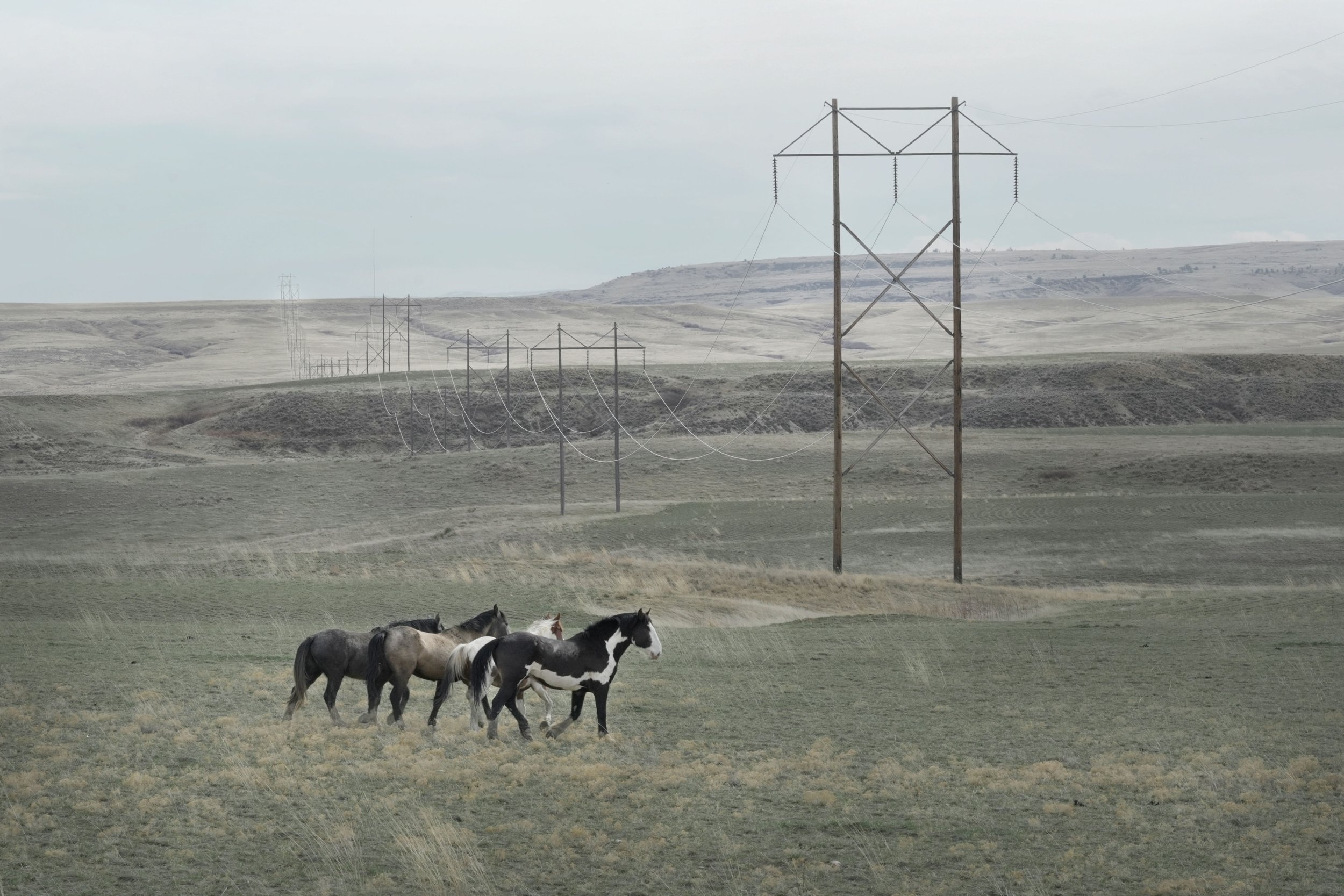
| Power Substation |
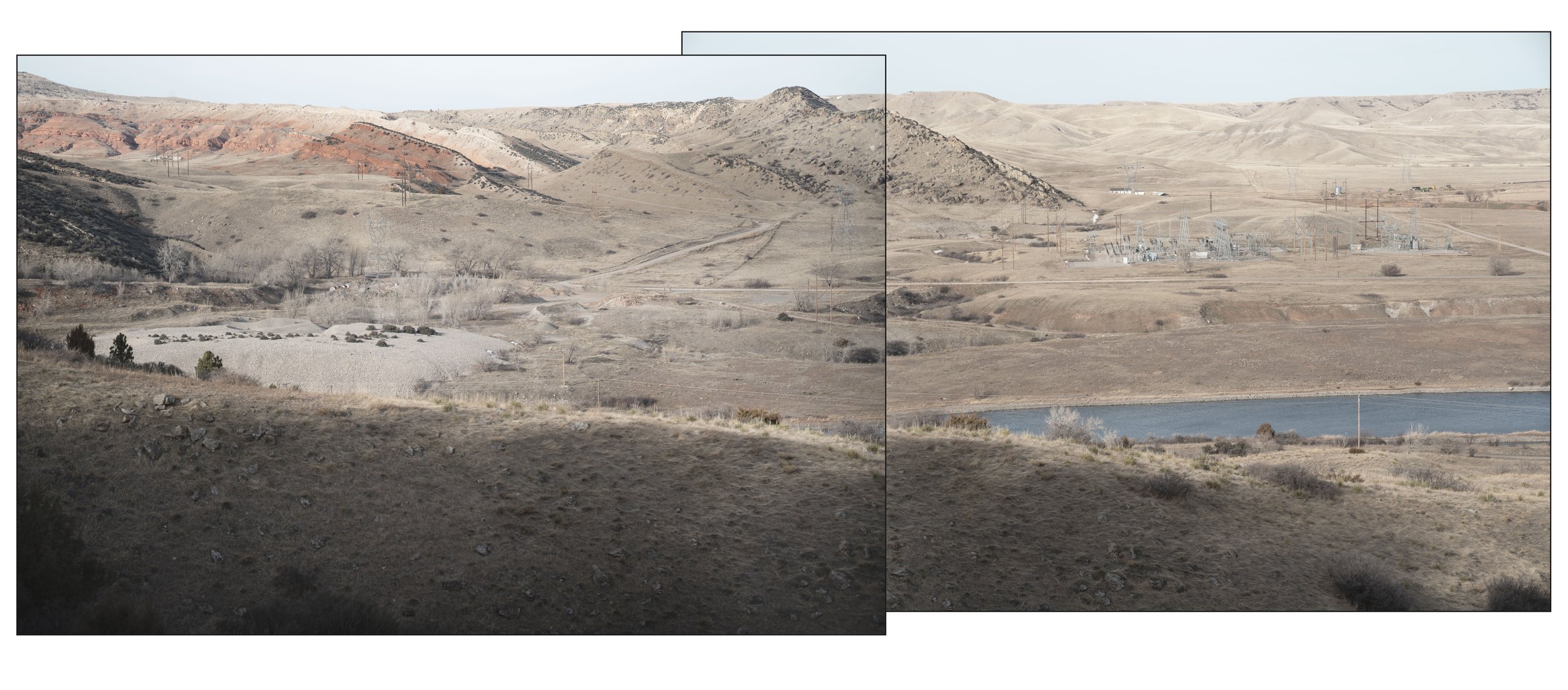
Distribution infrastructure for hydro electric to be pumped off the reservation.
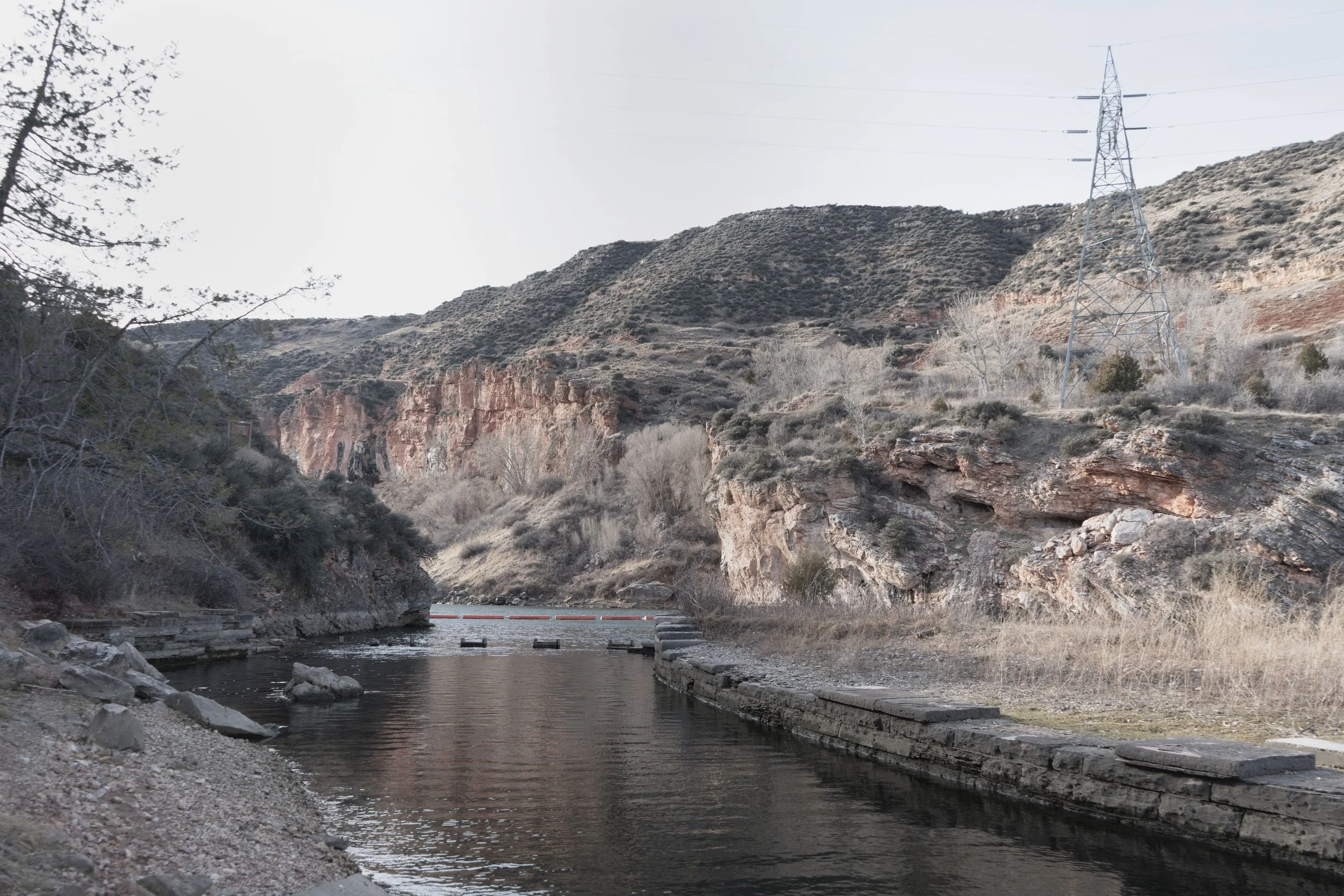
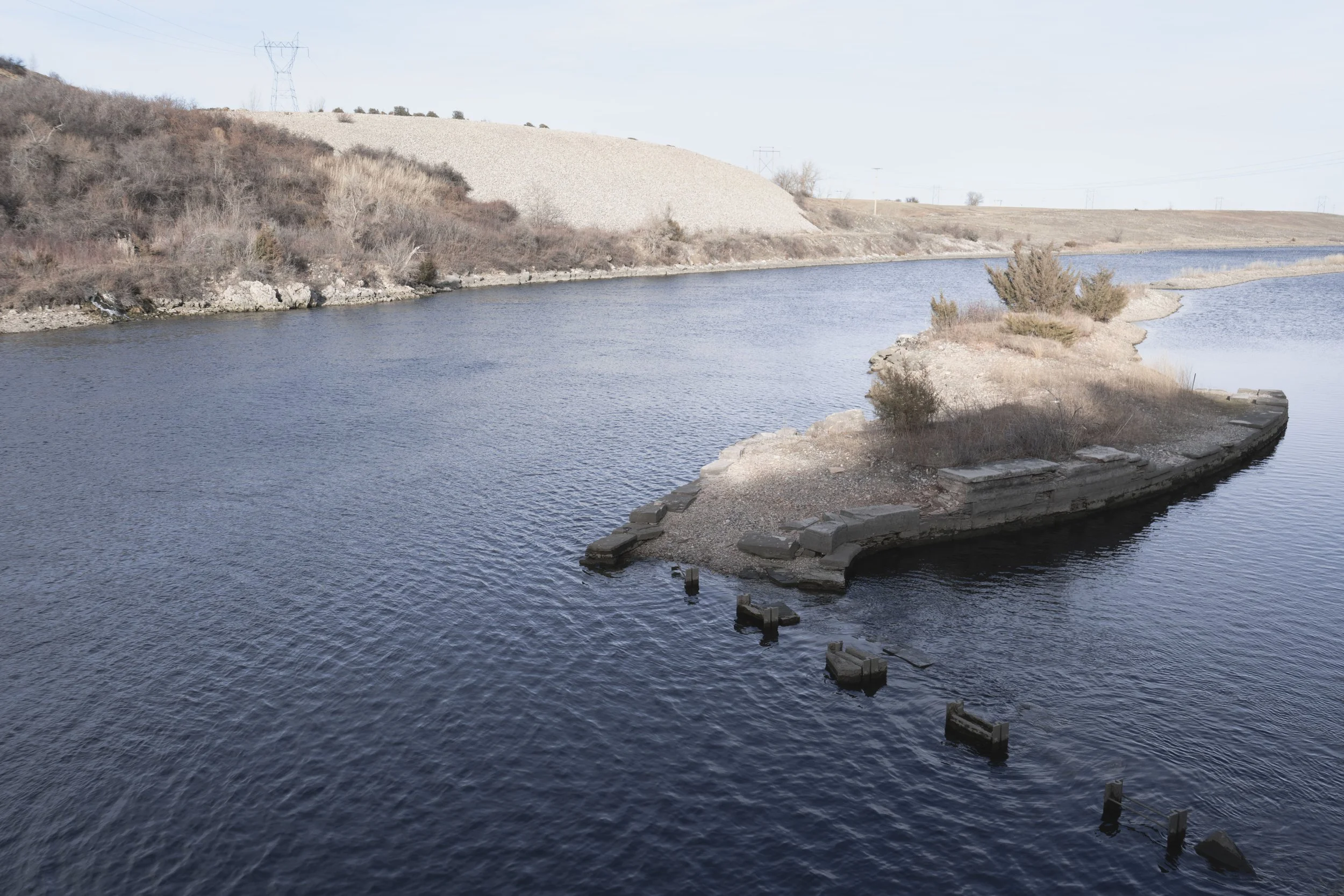
| Ruins of the Bighorn Ditch Headgates on the Bighorn River |
Designed and Built by the Apsáalooke, the Bighorn Ditch Headgates was central to the Crow Irrigation Project which was part of a forced shift in their way of life from nomadic hunters to self-sufficient farmers after the buffalo were gone. The ruins stand now as evidence of a different kind of federal relationship with the Apsáalooke people — one that has since been replaced by infrastructure built in their sacred canyon, but not for them.
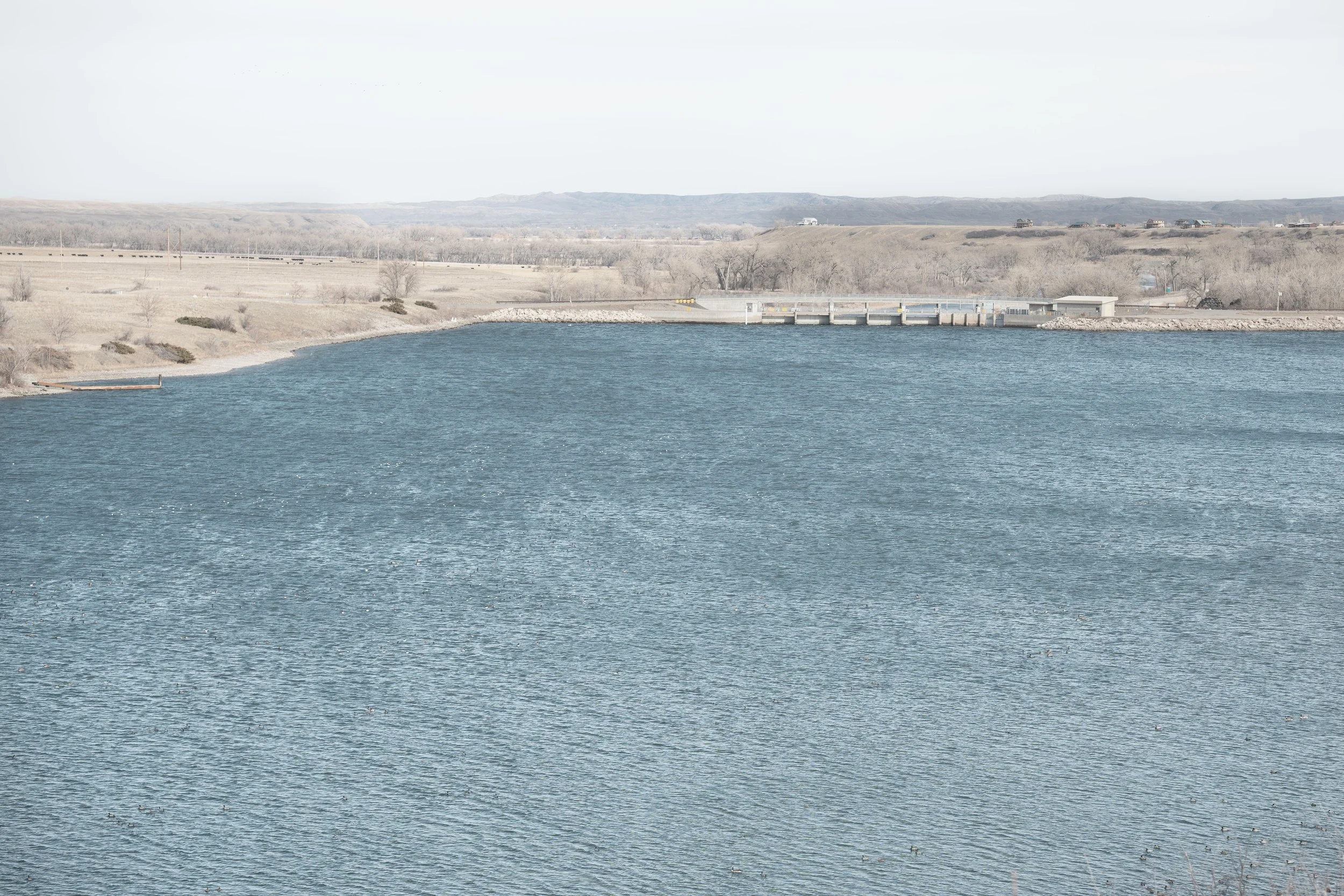
| Afterbay Reservoir, Fort Smith|
The afterbay dam and reservoir are located downstream of the Yellowtail dam in Fort Smith, a Bureau of Reclamation town within the reservation. The Crow tribe has the rights to build a powerplant at the afterbay dam; however, with the project costing an estimated 25 million dollars, most are unoptimistic that it will ever get funding.
| John Doyle |
John Doyle lives in Crow Agency, where he works as a water quality expert at Little Bighorn College. John is Deeply concerned about water on the reservation. A recent USGS study found PFAS contamination in fish tissue and biofilm from the Little Bighorn River, the same river that flows a few hundred meters from John's house. These chemicals are likely the result of wastewater treatment discharge, improper waste management, and industrial sites like the Carpet Mill Site. John explains how pollution, like most issues on the reservation, ties back to colonial disposition. Contamination is only part of what worries John. "This is where the water is," he says. As drought tightens its grip across the West, Doyle thinks about water refugees — and about what happens to reservation land when water grows scarcer.

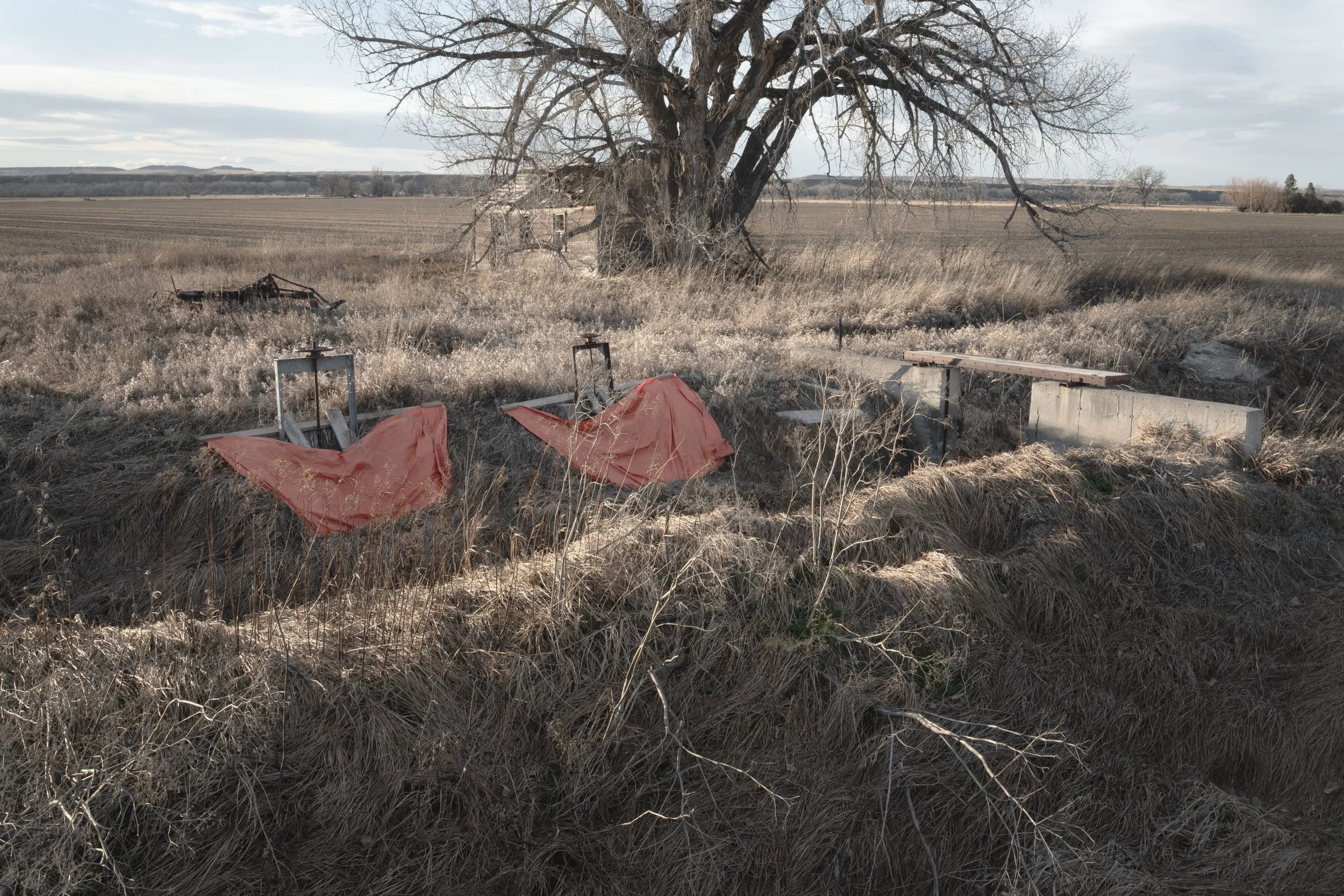
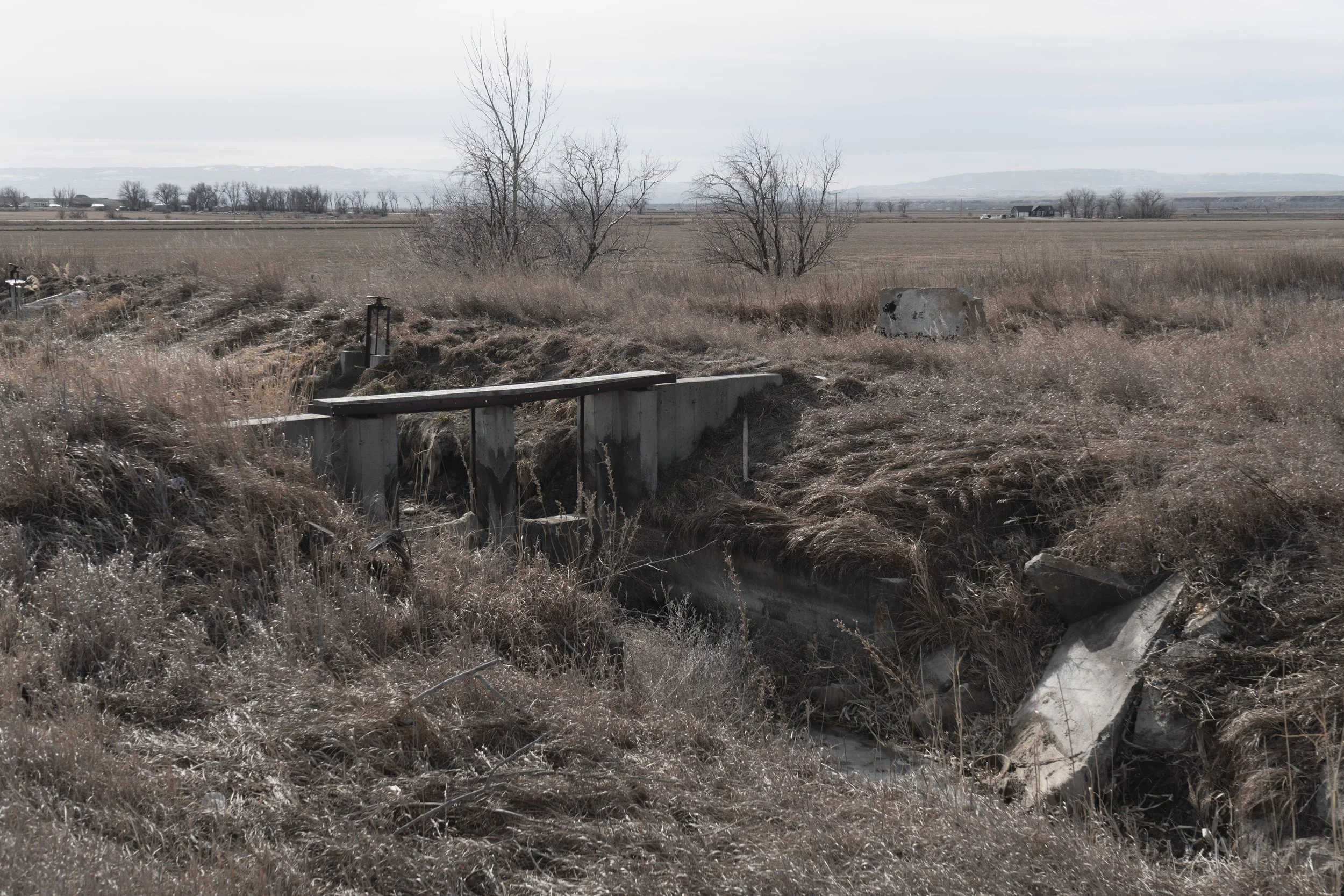
| One of Many CIP Floodgate Ruins |
While the CIP irrigated the fields of non-Native farms, it also served the Apsáalooke people for a time. That ended with the construction of Yellowtail Dam in 1967, which rendered most of this infrastructure obsolete. Today many fields once flooded by these gates sit dry and unused — a consequence of checkerboarded land ownership and the displacement of tribal members from their own land. According to John Doyle, the absence of flood irrigation is depleting the groundwater table — a resource that grows more critical as glaciers in the Wind River mountains continue to retreat.
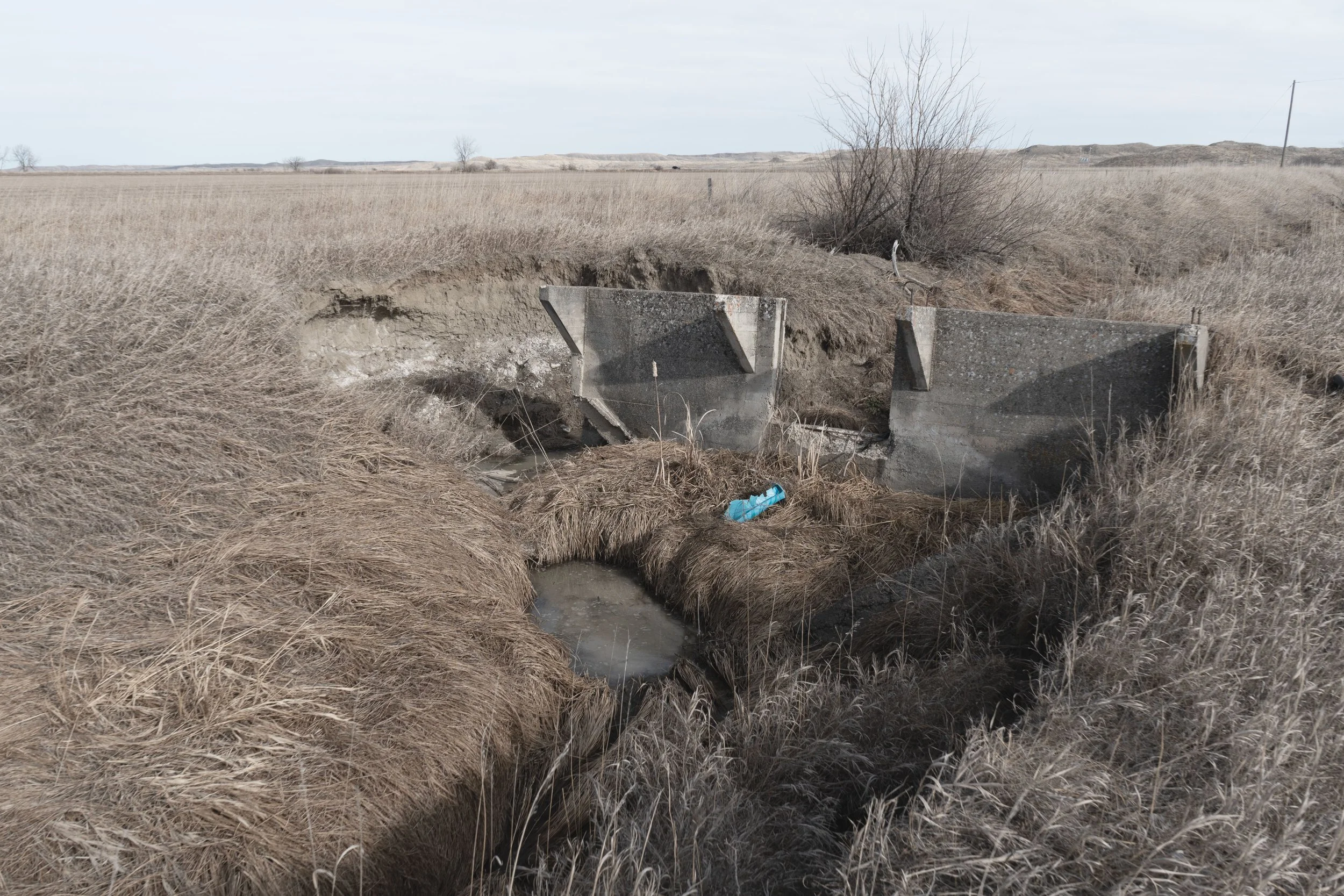
| Diminishing Ground Water |
According to John Doyle, the lack of flood irrigation is depleting the groundwater table, a resource that frows more critical as glaciers in the Wind River mountains retreat.
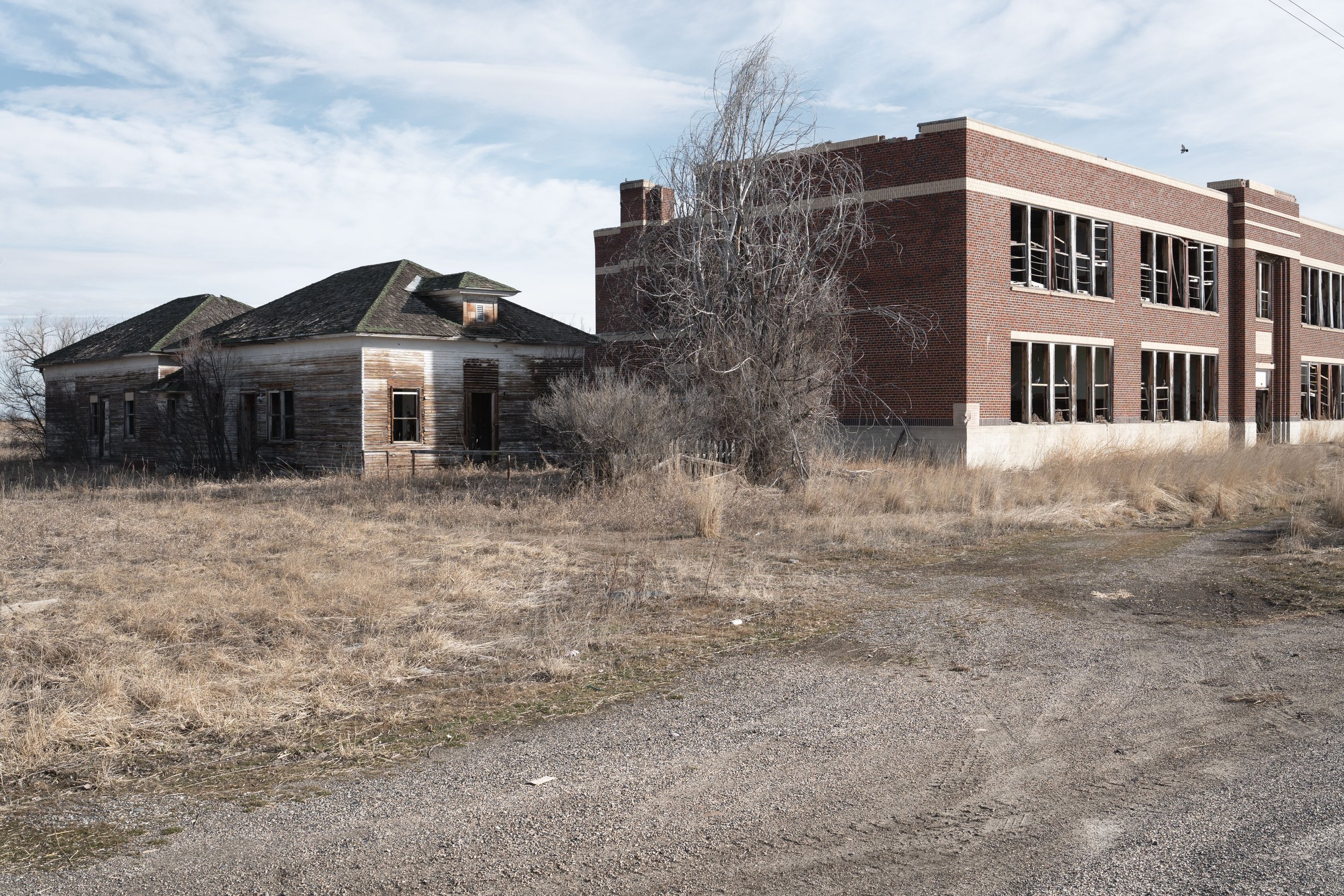
| Abandoned School, St. Xavior |
A New Deal Public Works Administration building, designed in 1938 and closed in 1967, the same year the Yellowtail Dam was completed upstream on the Bighorn River. A new Bureau of Reclamation town at Fort Smith drew away population and resources. Many of the children from St. Xavier were absorbed into the school system in Hardin, the nearest off-reservation town, continuing a longer pattern of Crow children being educated away from their own communities.
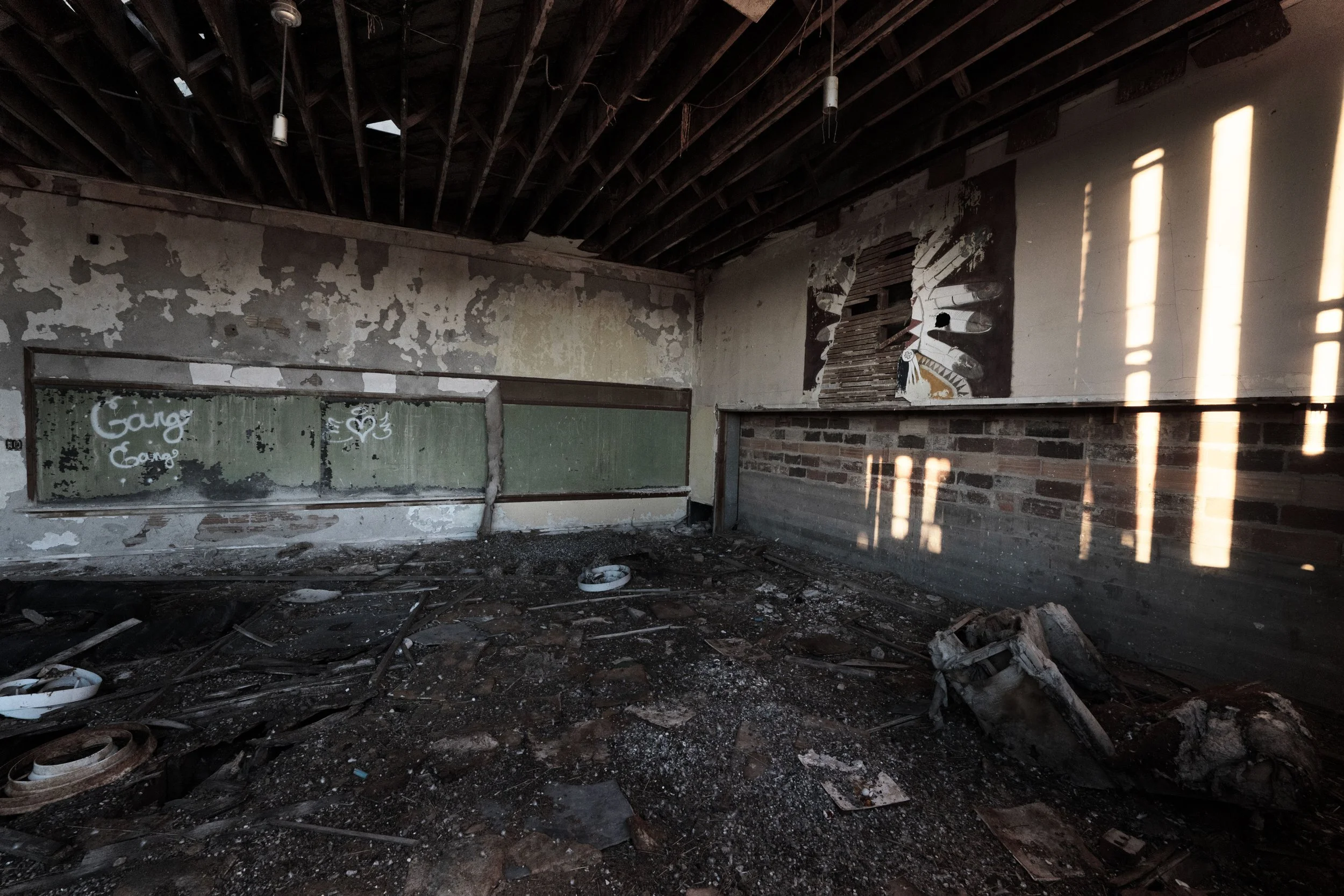
| Hand game Tournament, St. Xavier |
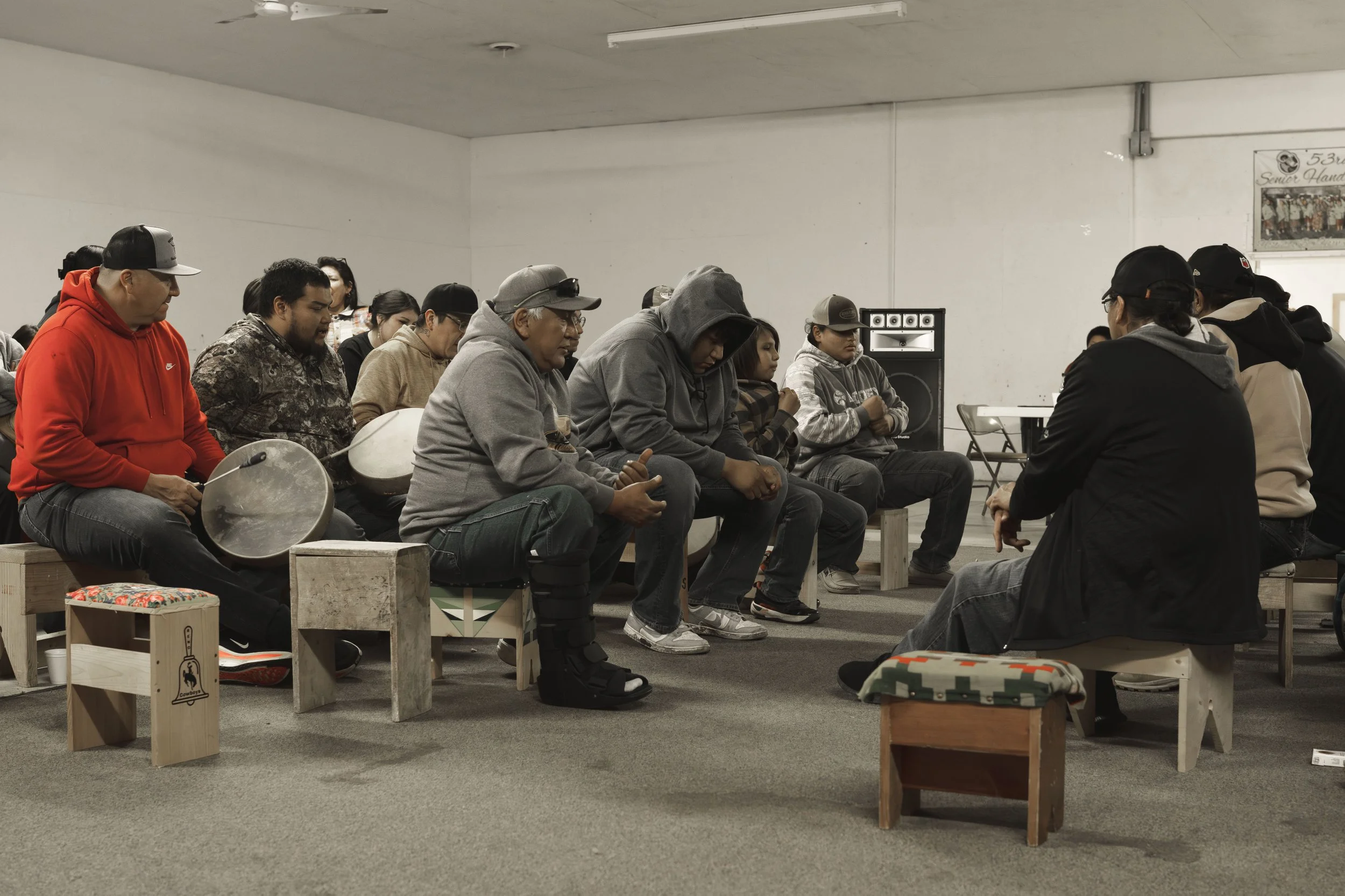
St. Xavier sits largely empty, its buildings weathered and quiet. Tribal members still gather here for Hand game — an ancient guessing game played in teams, accompanied by singing and drumming that can last through the night. Part ceremony, part competition, the game has survived everything. So have the people who play it.
| Tilton and Jerome |
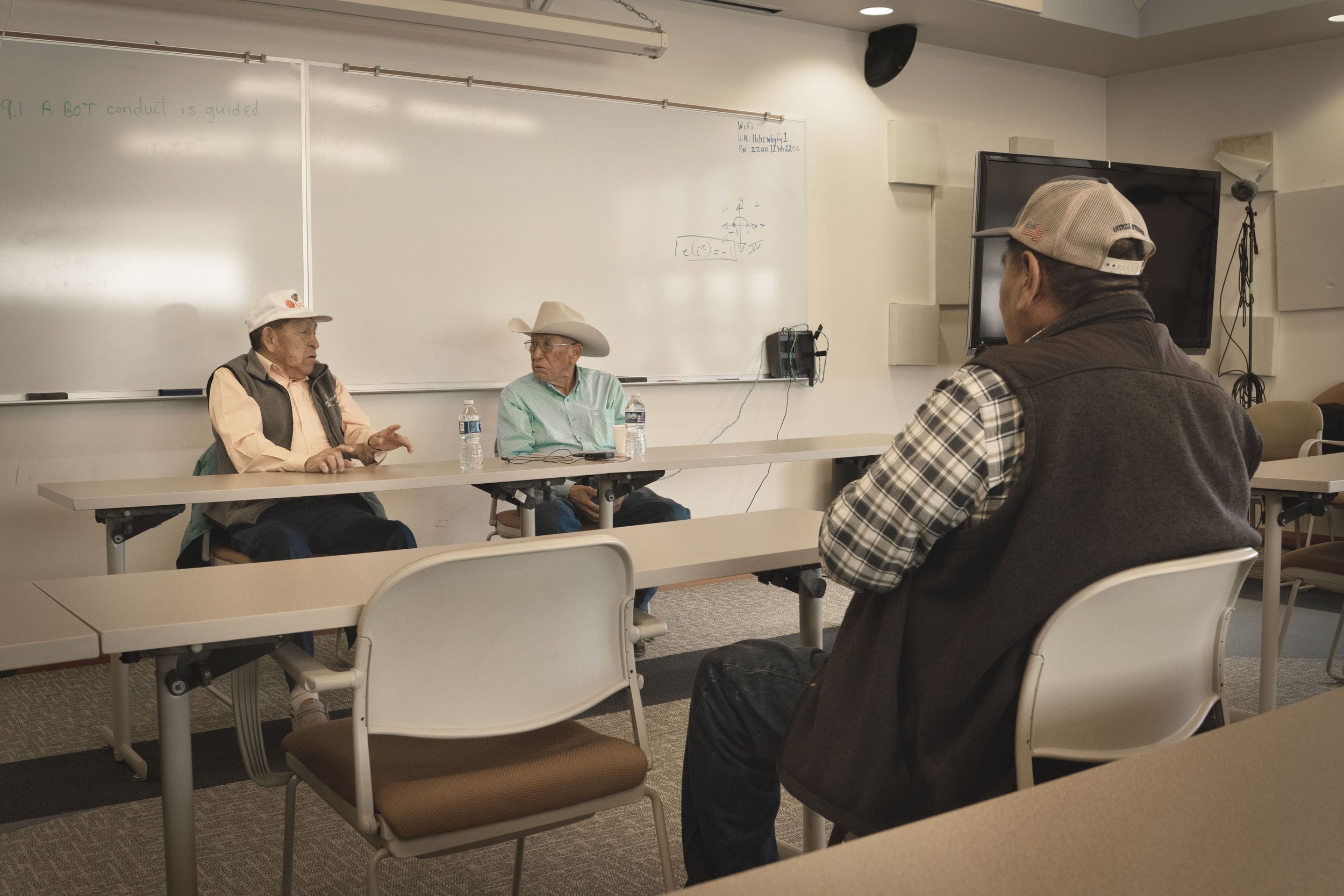
At a culture talk at Little Bighorn College in Crow Agency, Tilton Old Bull and Jerome White Hip speak about the ancient Apsáalooke traditions of camp crying and the right to speak in public, practices that, like the language itself, are disappearing. Colonization and modernization share the blame, though Tilton and Jerom point to two more immediate forces: smart phones and Christianity.
| Carpet Mills |
Carpet Mills is a neighborhood in Crow Agency that takes its name from an abandoned factory at its center. The Mill was opened in 1968 by Big Horn Carpet Mills, Inc., a California corporation in partnership with Mohasco Industries, Inc., through a lease agreement with the tribe. It closed six years later, leaving behind a concentration on chemical dyes, adhesives, and manufacturing residue leaching into the soil and groundwater of the surrounding neighborhood. The site entered the federal superfund database and sat untreated for twenty-six years before the tribe, working with a 200,000-dollar EPA grant, cleaned it up between 2000 and 2006.
| Open Dump, Crow Agency |
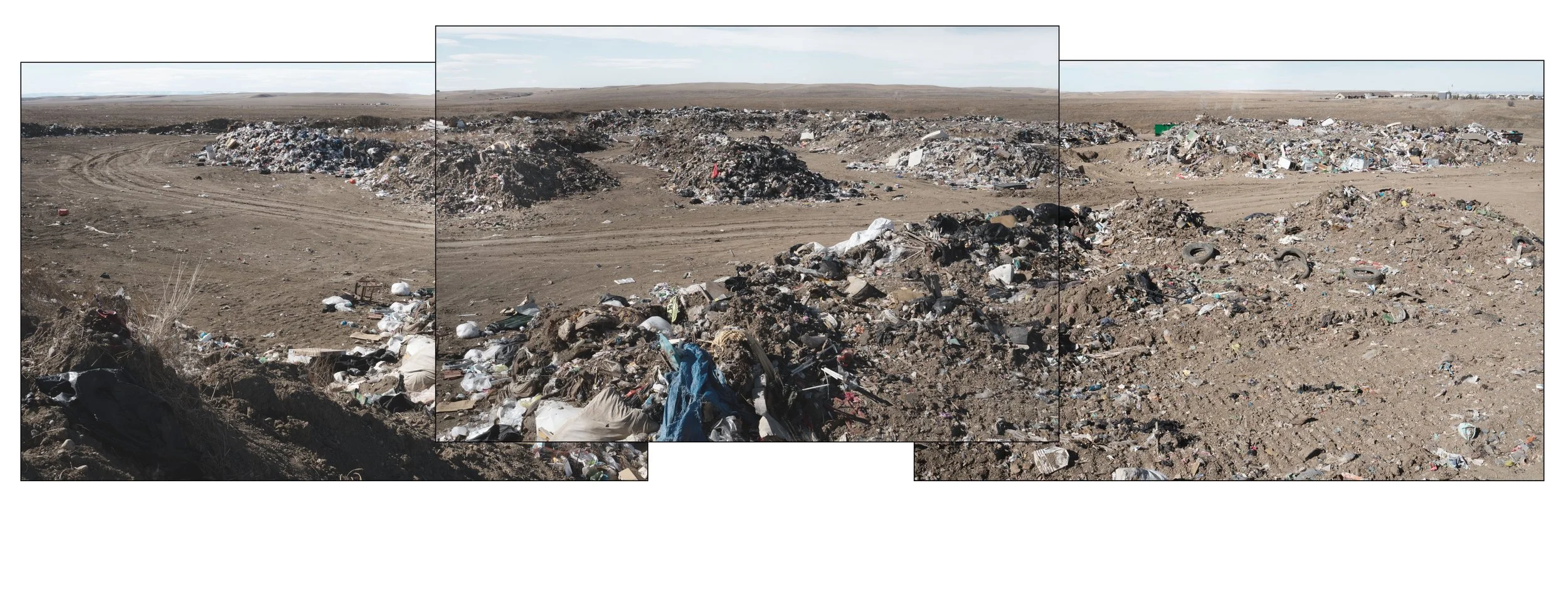
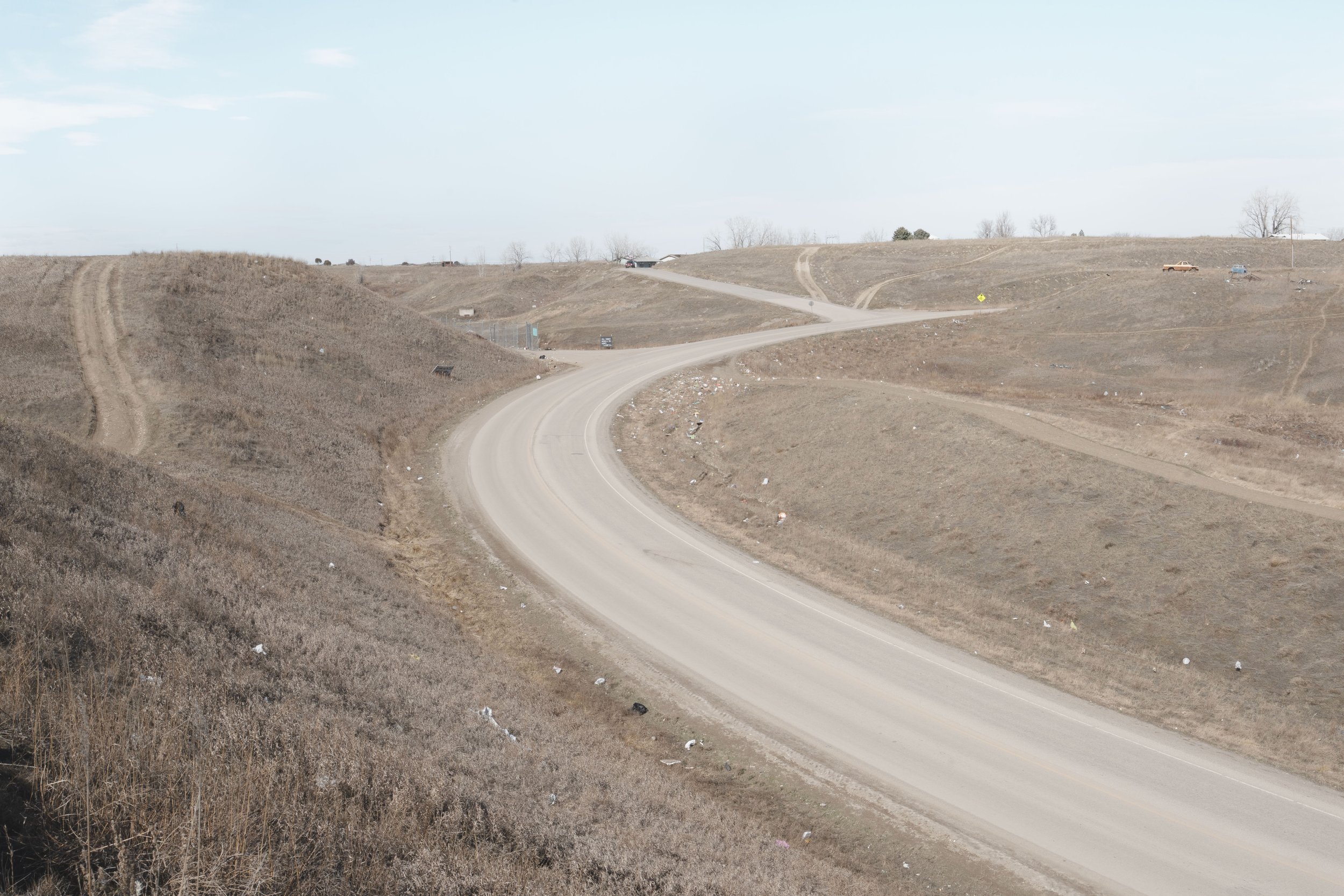
Under federal law, open dumps are illegal. The federal government also holds legal trust responsibility for reservation infrastructure — meaning it is obligated to fund basic services like waste management for tribal nations. On the Crow Reservation, as on hundreds of reservations nationwide, both of these facts exist simultaneously. Without funding for a compliant facility, waste accumulates. With nowhere for it to go, it blows throughout the community and is eventually burned. The smoke drifts into the surrounding residential neighborhoods.
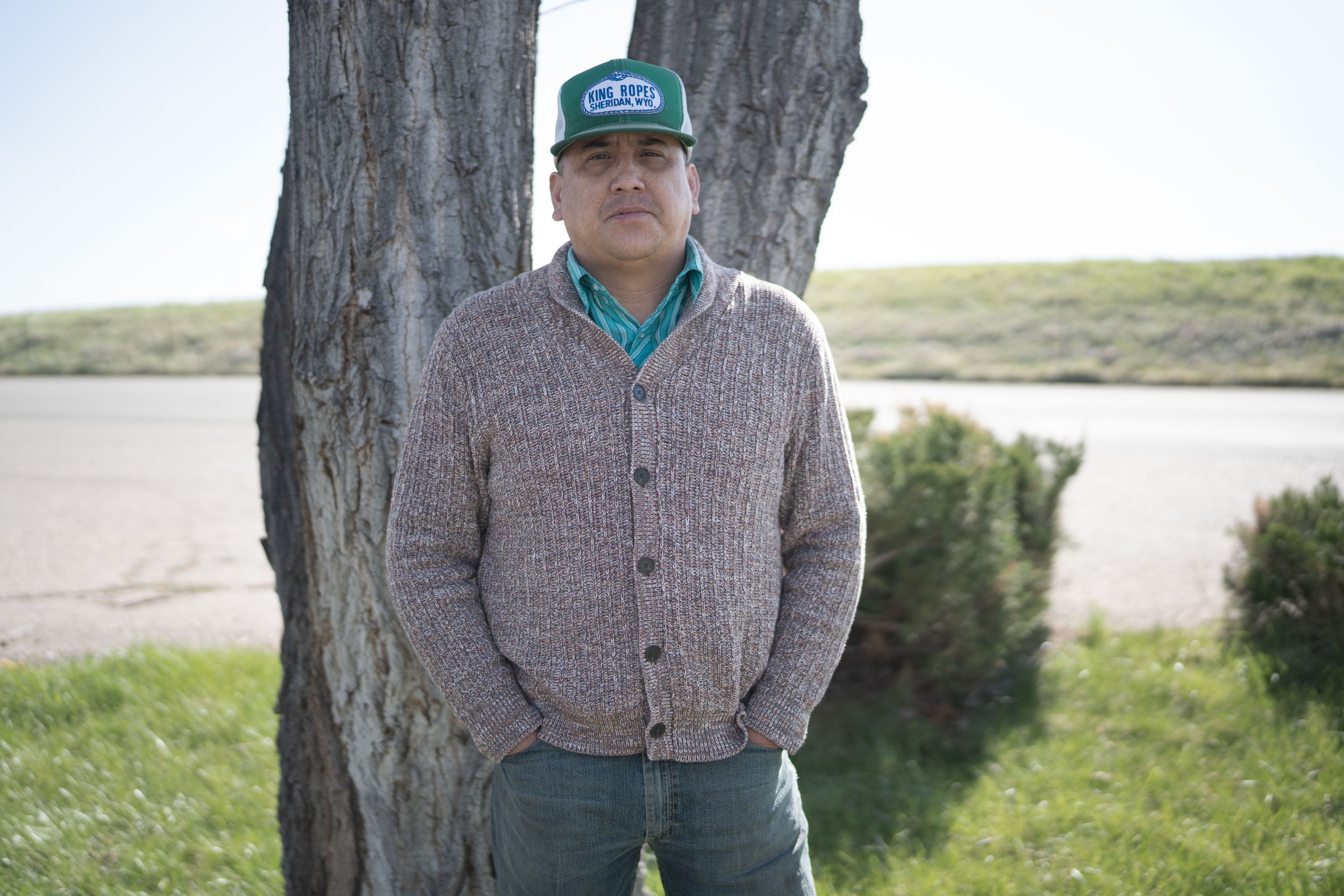
| Aaron Brien: Anthropologist and Director at the Crow Tribal Historic Preservation Office |
Most of Aaron’s work involves surveying sites across the reservation to protect artifacts when corporations move in to build infrastructure. When something goes wrong, when artifacts are destroyed, it is never the corporations that face consequences. It is the Native surveyors who lose their jobs and go to jail.
| Drama Street |
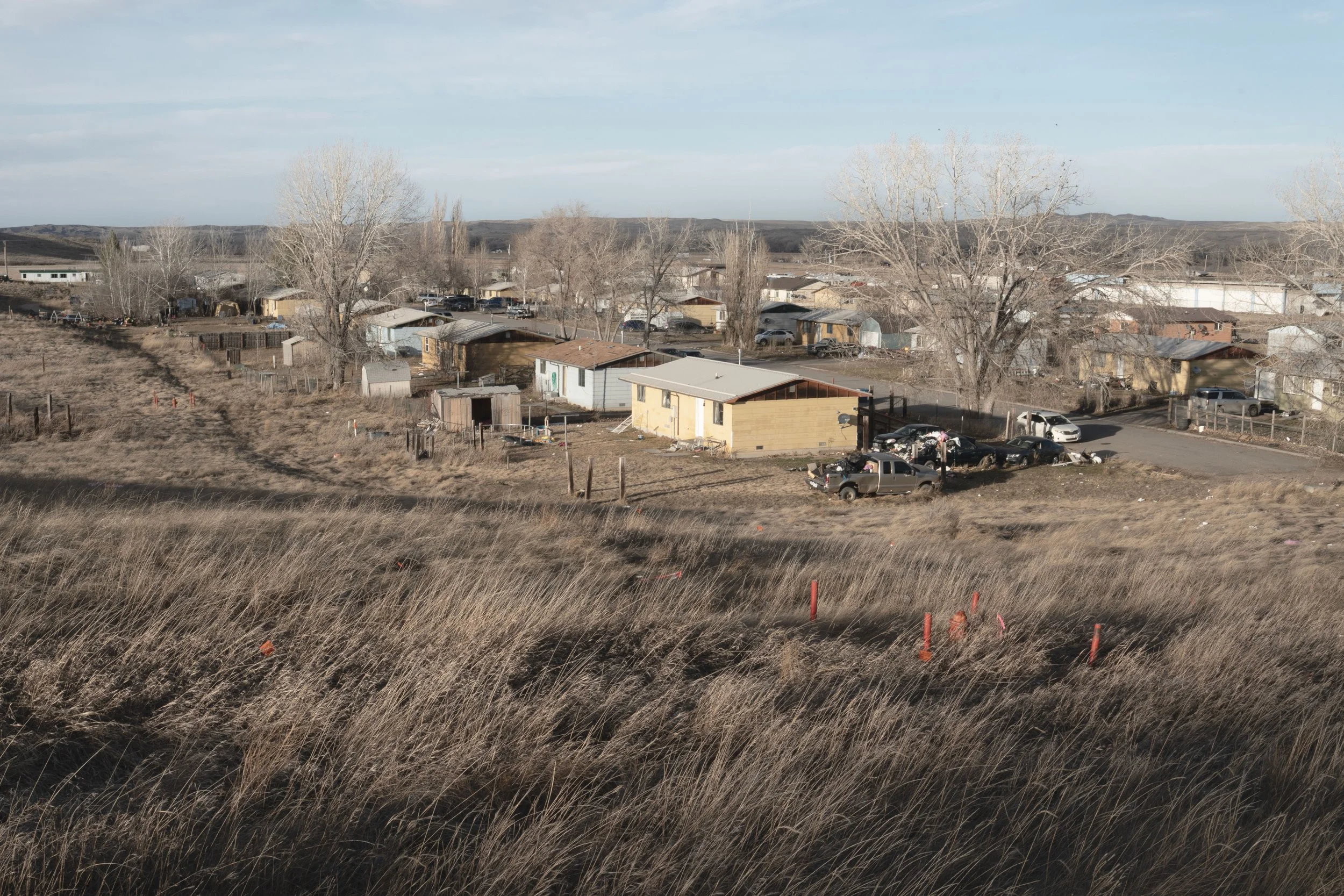
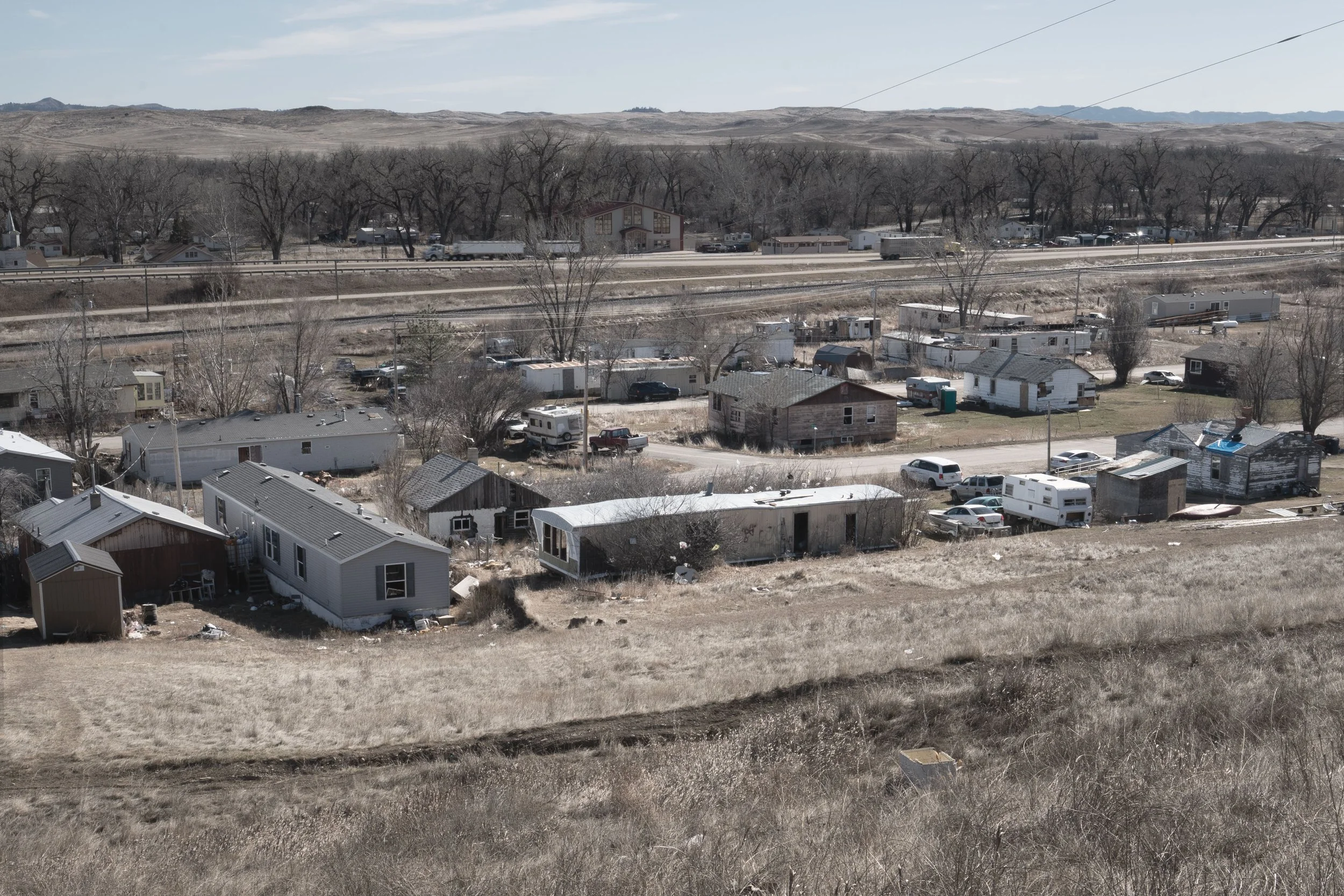
Aaron Brein grew up on Drama Street. When I asked why it was called that he said, “Because it was hard man, that place was crazy.” When meth came to the reservation in the late 90s it started in the house down the street from his, "that's why we had to move,” Aaron explained. Now Drama Street sits just down the hill from the open dump, enveloped in trash. The state of the houses tells a story of trauma from the meth epidemic, and the interstate bisecting the neighborhood that was completed in 1980 is a stark symbol of government indifference for these communities.
| Teepee Service Gas Station |
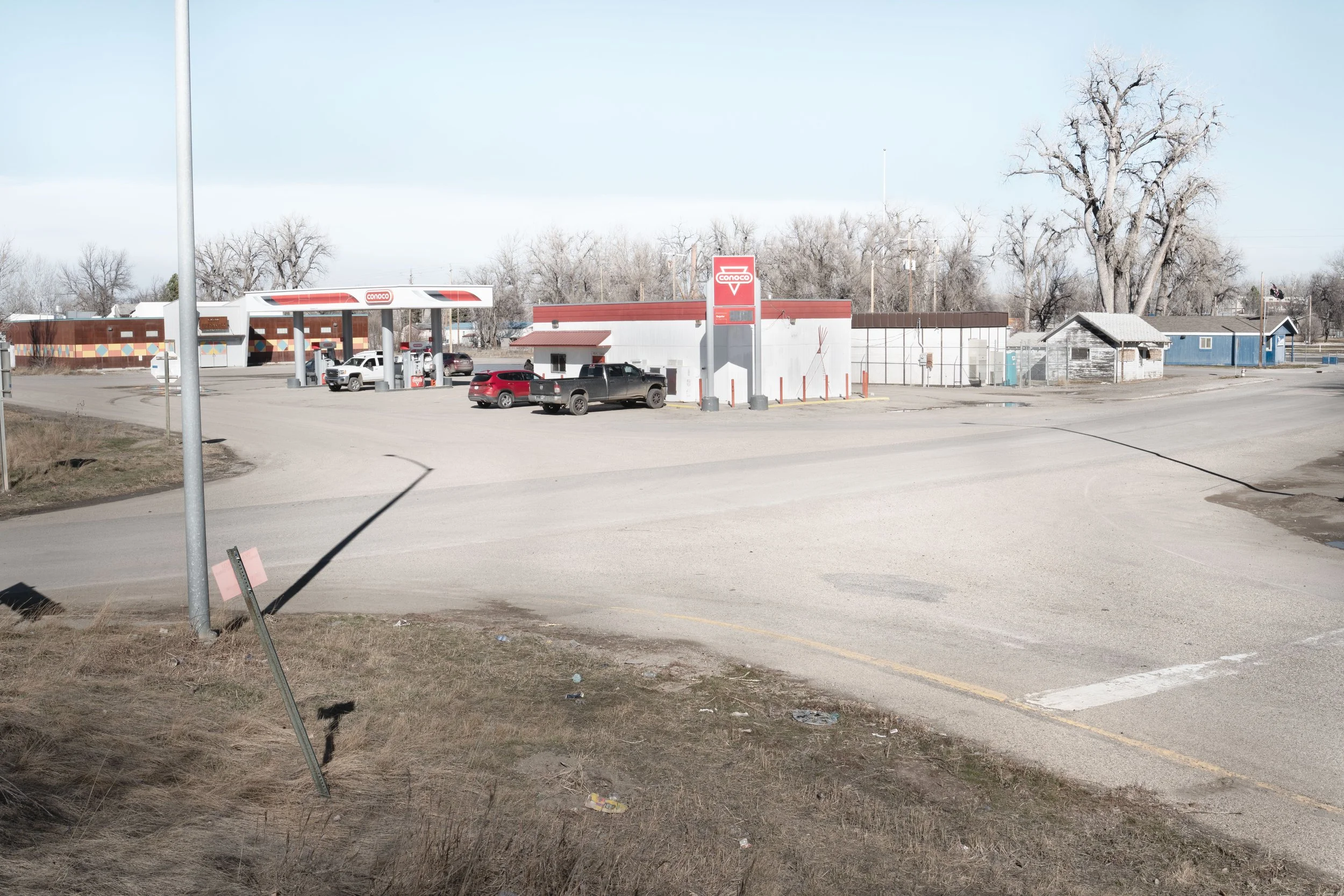
This is the only remaining brick and mortar business in Crow Agency, the capital of the Apsáalooke nation.
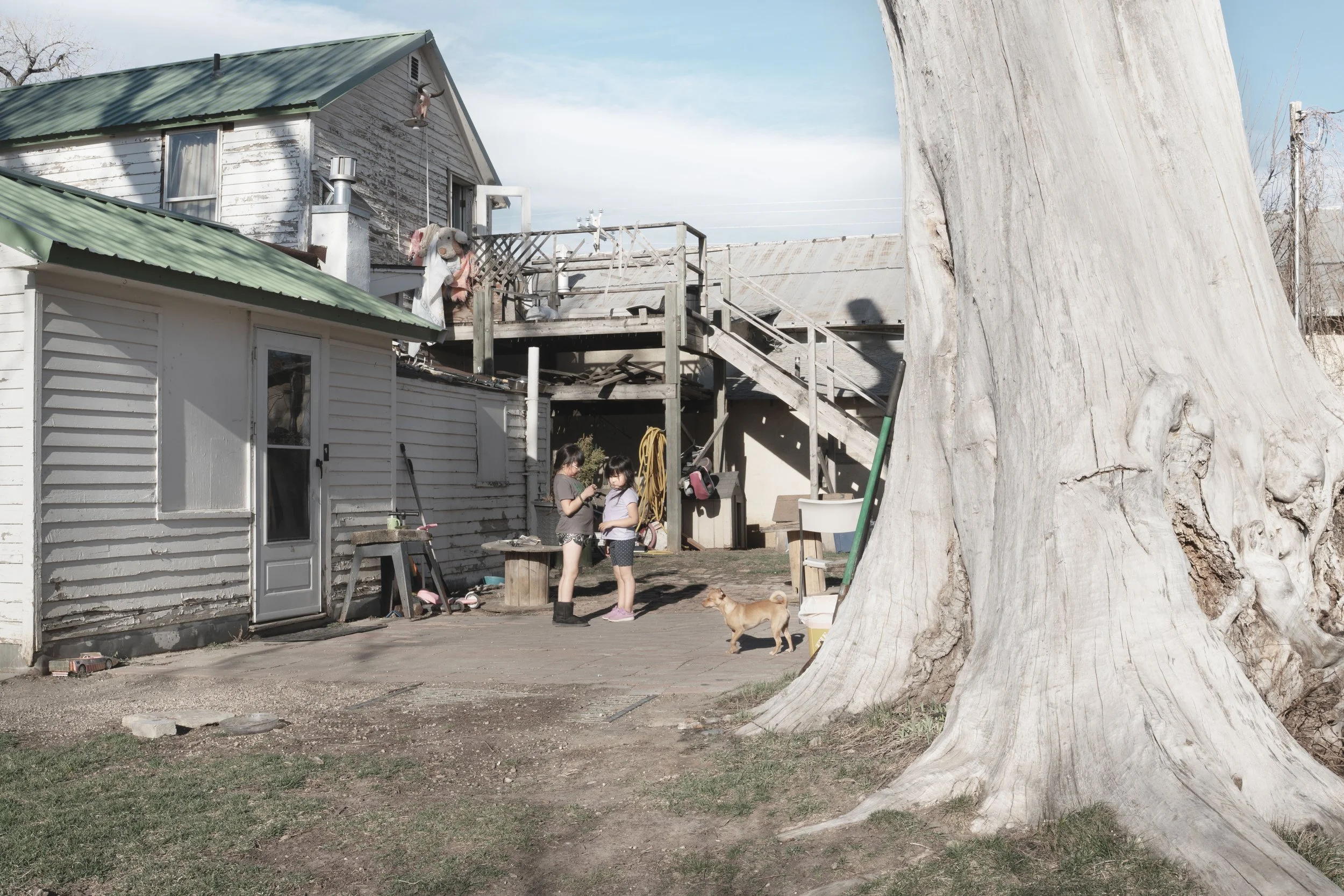
| 4 Generations, One House |
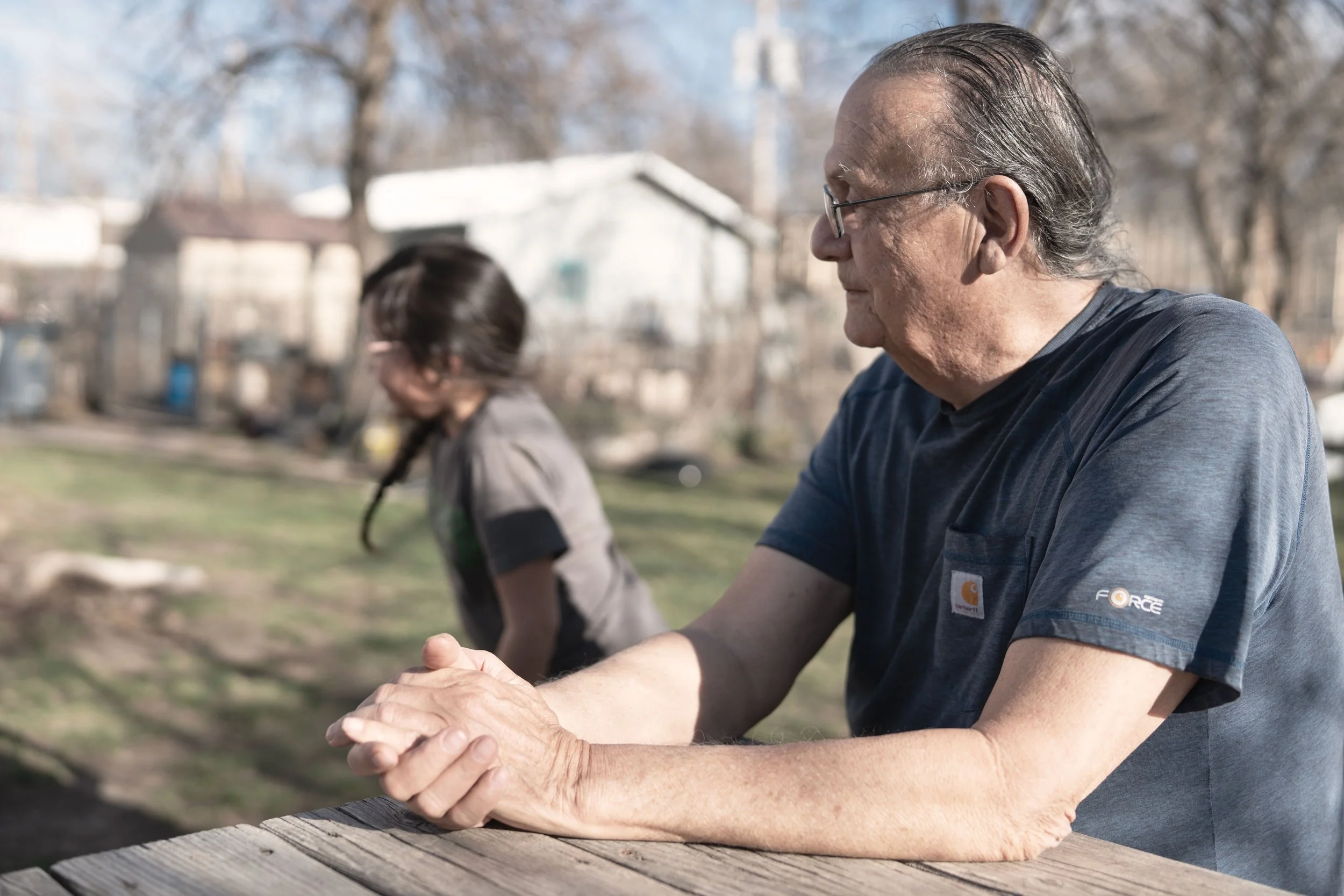
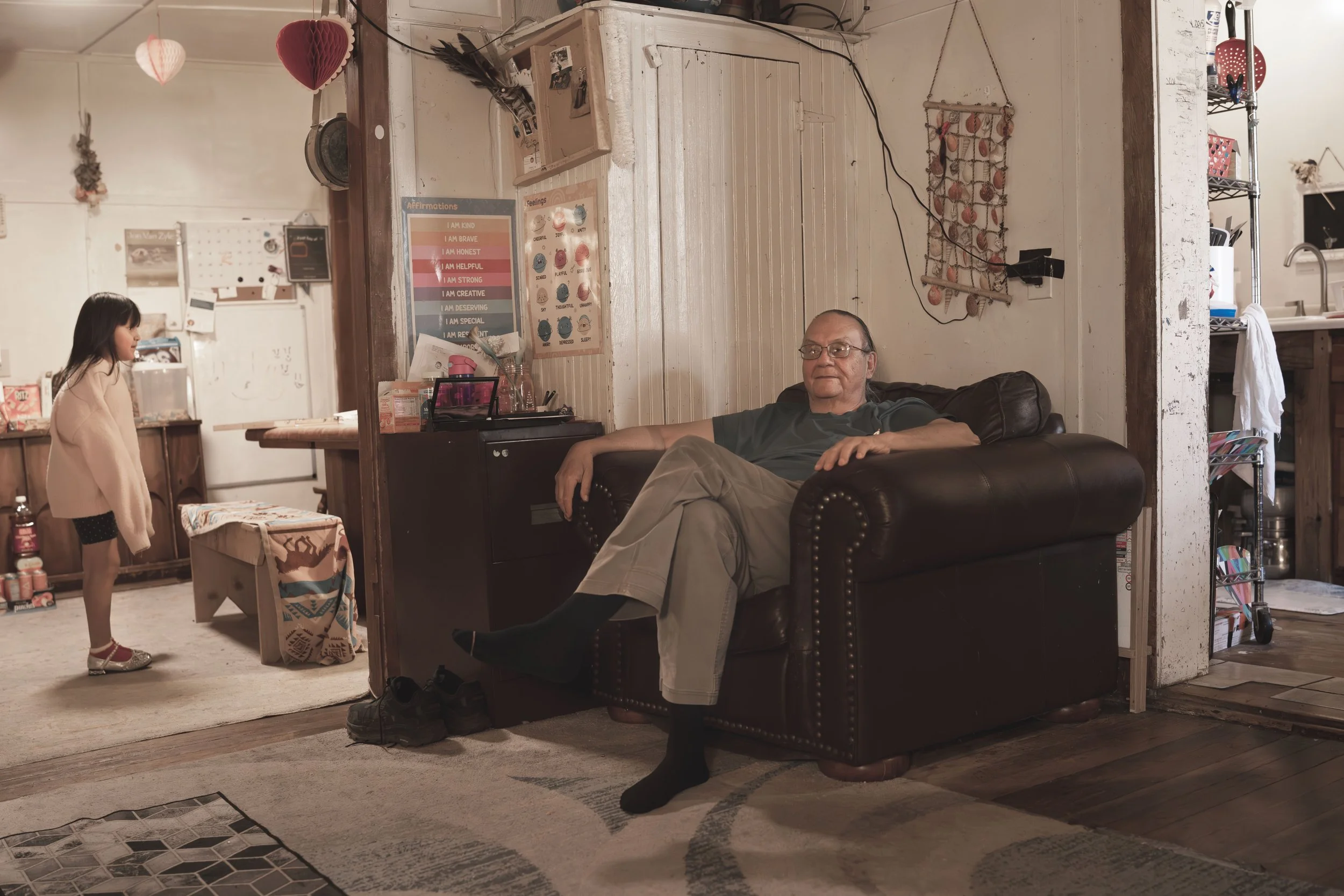
A total of 14 people live in John Doyle’s house, including his great granddaughters, “but there are smaller houses with more people,” says John. Several factors including limited infrastructure and housing shortages have led to a worsening housing crisis on the Crow Reservation. This forces families into crowded living conditions or off the reservation entirely.
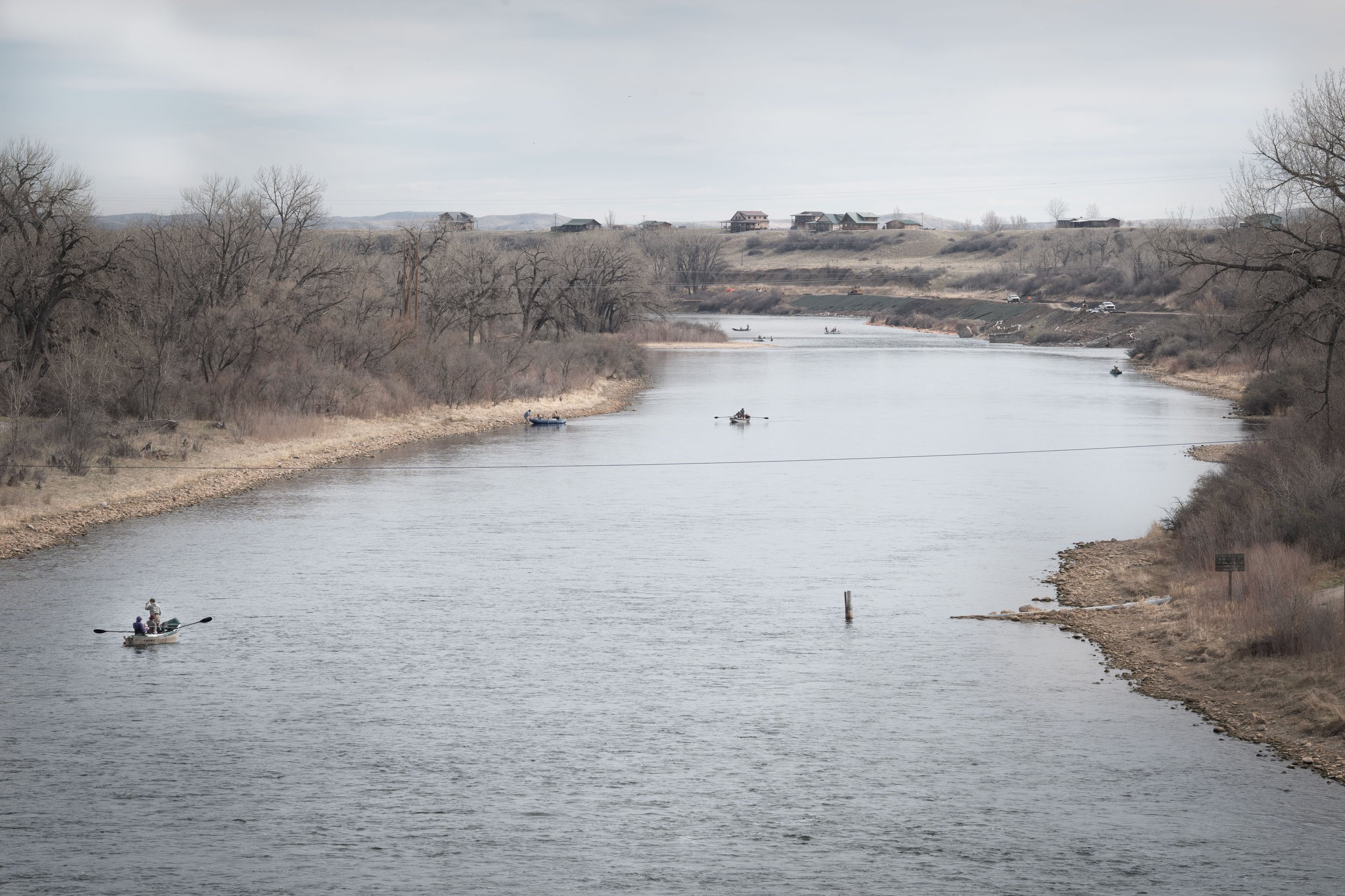
| Trout Fishing Tourists and Luxury Lodges on the Bighorn River |
The trout fishing industry on the Bighorn River has made over 50 million dollars per year since the Apsáalooke tribe lost control of the river in 1981. Effectively, none of that money goes back into the tribal economy.
In 1981 the court case Montana v United States ruled that the Apsáalooke tribe had no authority to prohibit non-tribal members from hunting and fishing on land within the reservation owned by non-natives. The court ruled that the riverbed belonged to the state because it was not explicitly stated as tribal land when the reservation was created. As a result, the tribe lost control of the Bighorn River and the ability to regulate nonmember access to it.
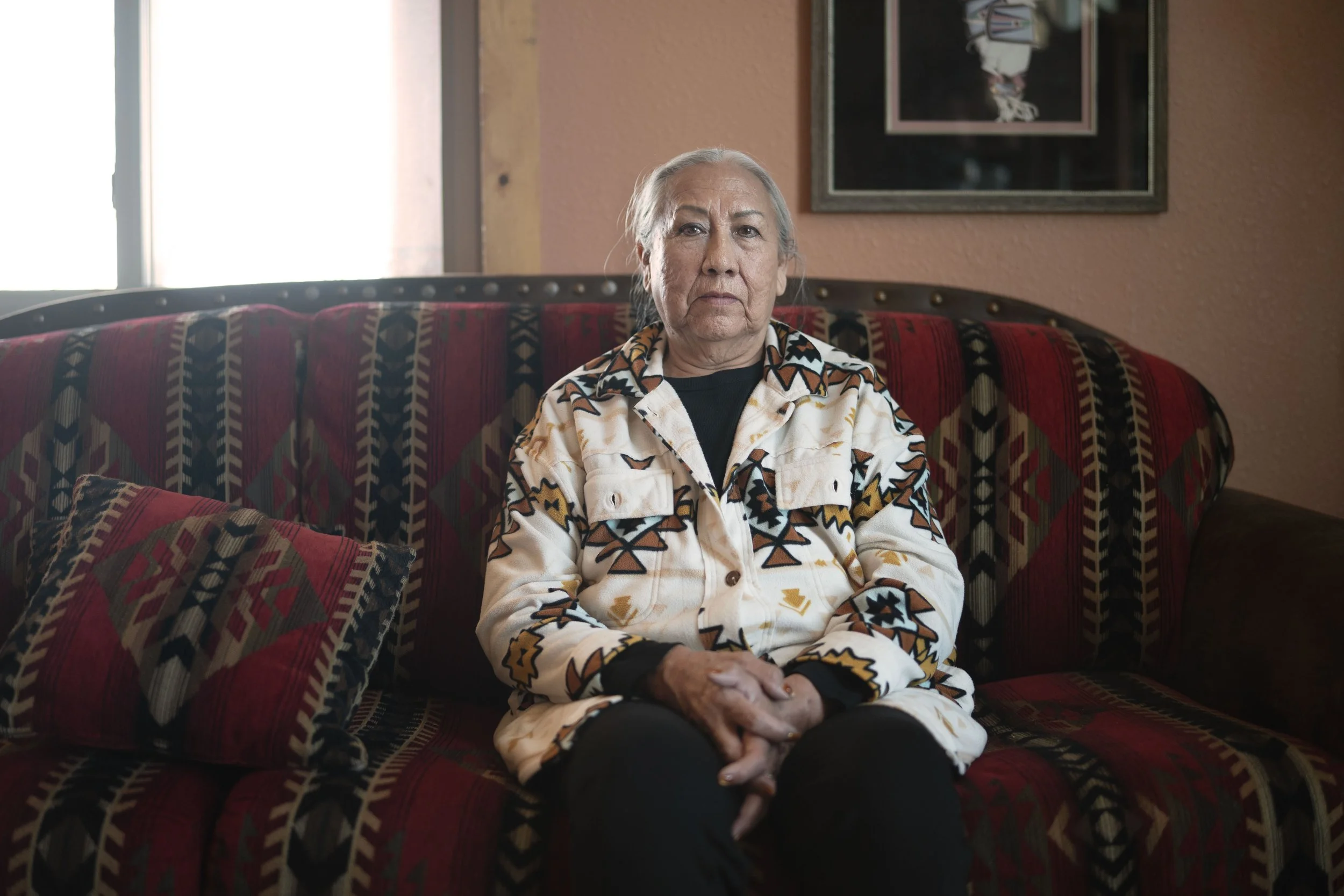
| Birdie RealBird |
Birdie grew up in Crow Country, just down the street from where she lives now — eating from apple trees and choke cherry bushes on her walk to school, before the interstate cut through the reservation. "We were walkers back then and there was wild food everywhere." In 1981 she marched with her brother Richard RealBird from Crow Agency to Hardin in protest of Montana v. United States, the Supreme Court ruling that stripped the Crow Tribe of control over the Bighorn River. “People don't eat food from the land anymore, and nobody walks.”
| Richard RealBird |
In 1988, Birdie’s brother and Crow Tribal Chairman Richard RealBird filed suit against the federal government for failing to enforce Section 2 of the Crow Act of 1920 — restrictions designed to prevent non-tribal members from acquiring excess reservation land. The following year, federal agents came to arrest Richard. Driving through Crow Agency, his nephew Wacey recalls riding with Richard's brother Kinner to intercept the federal agents. Kinner left the car blocking the road and pulled Wacey toward the river to hide. Richard was charged with stolen lightbulbs, conspiracy, and bank fraud. To the RealBird family and the broader tribe, the timing was unmistakable.
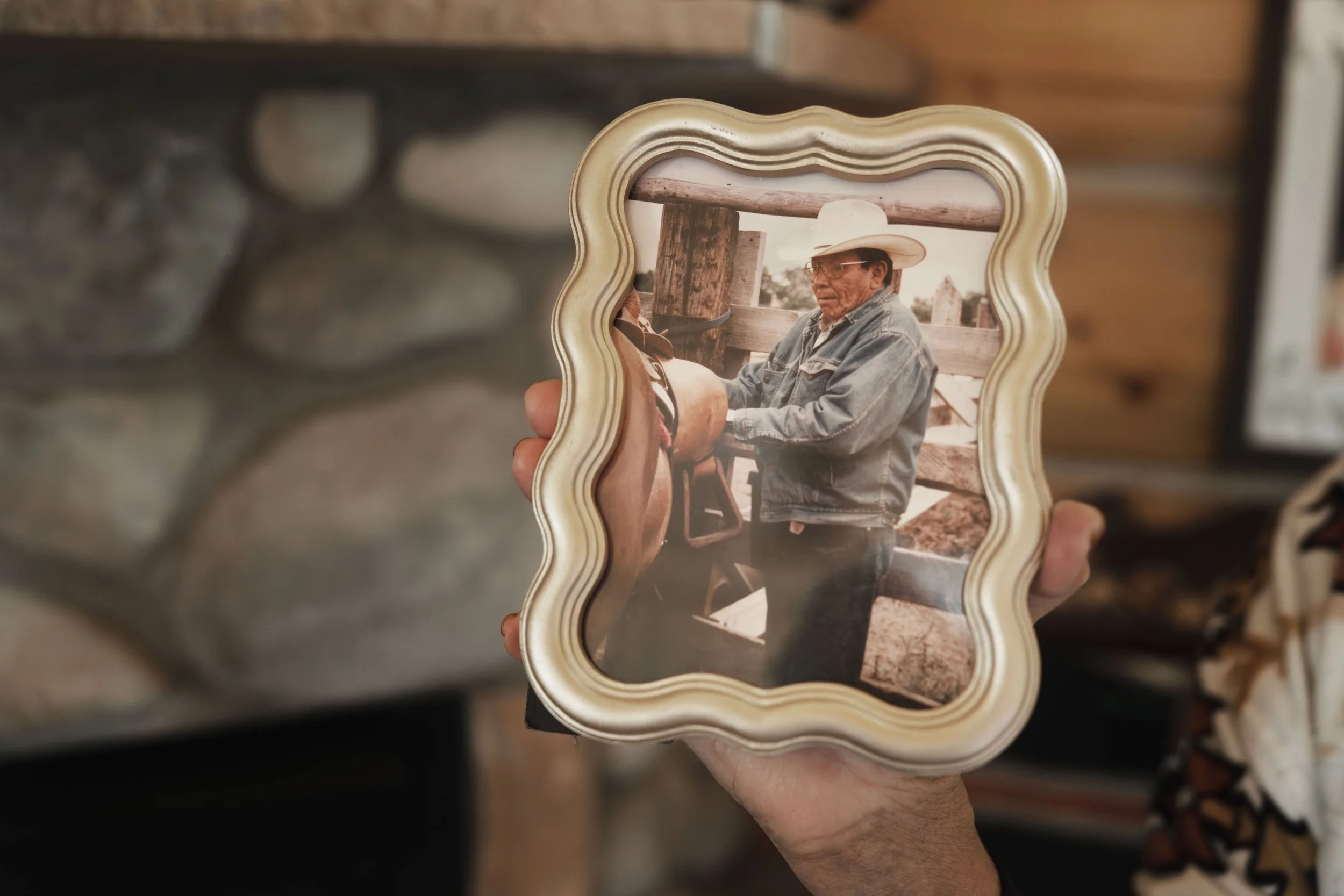
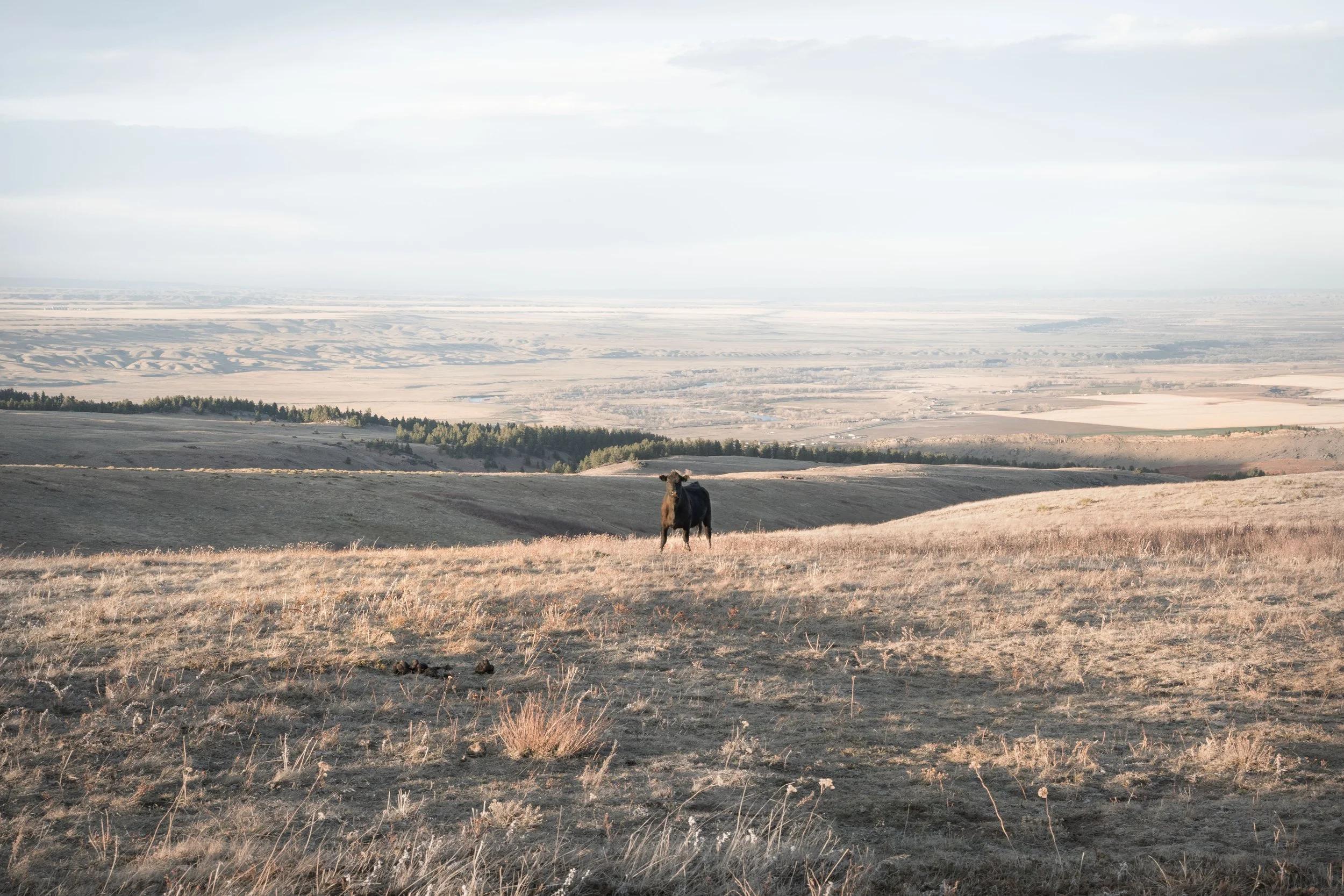
| Cattle Dominance |
Ranching is the biggest industry on the Crow Reservation. In 2017, 92.9 million dollars came out of agricultural sales… only 5-6% of that was from Crow producers. “That was in 2017, Imagine what that number is now” Aaron Brien explains. Among the biggest of the non-native ranching giants in the bighorn valley is the Padlock ranch.
| Wacey RealBird |
Wacey is an Apsáalooke rancher and ex-politician. He has spent most of his career going up against non-native ranchers and corruption in the Bureau of Indian Affairs (BIA). Like his late uncle Richard, he wants to give Crow people fair opportunities at controlling their land. At the time of this photograph Wacey spent 4 days counting Padlock Cattle on tribal trust land that he leases. On his 600-acre ranch, he counted 900 head of padlock cattle, but there were more that went uncounted.
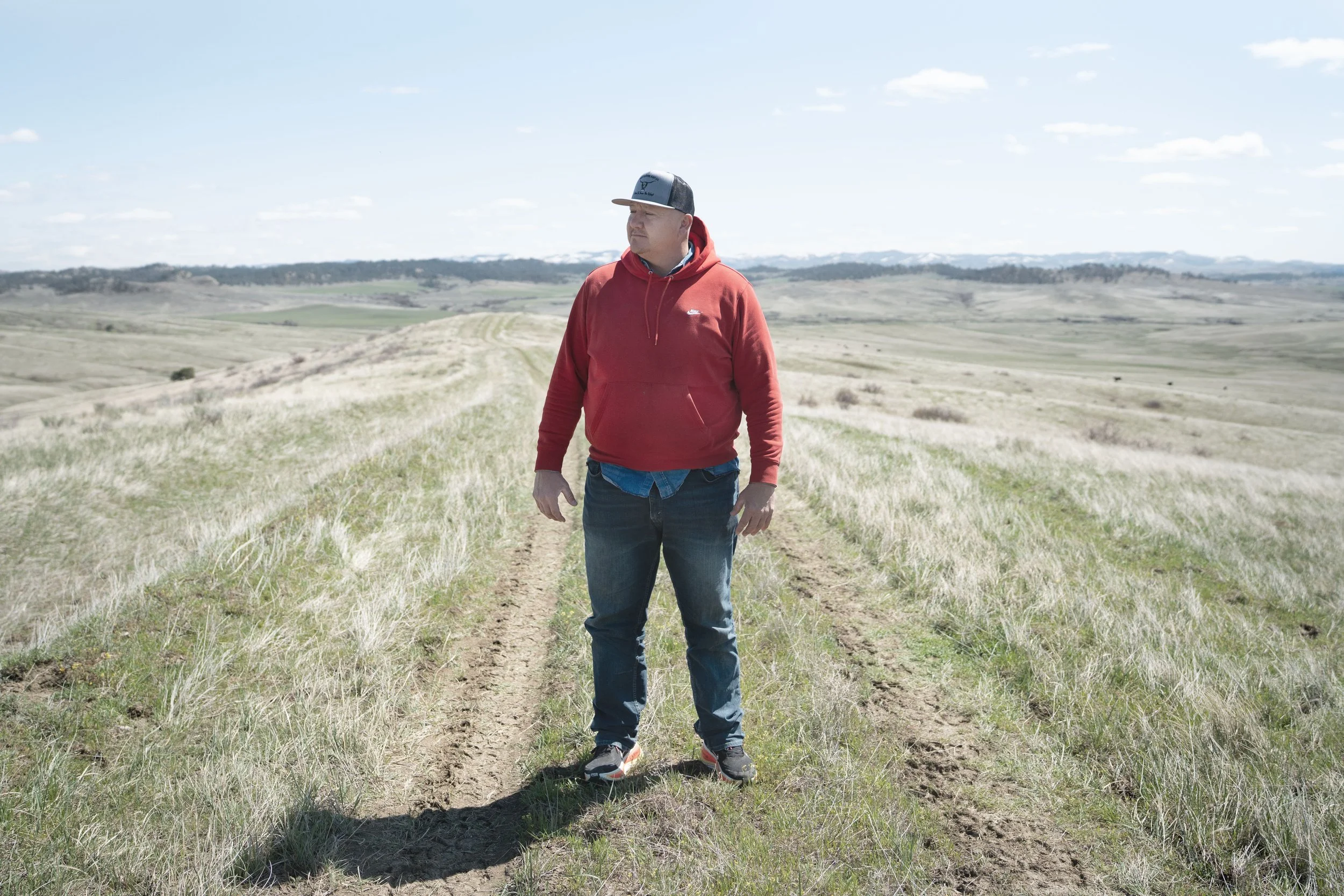
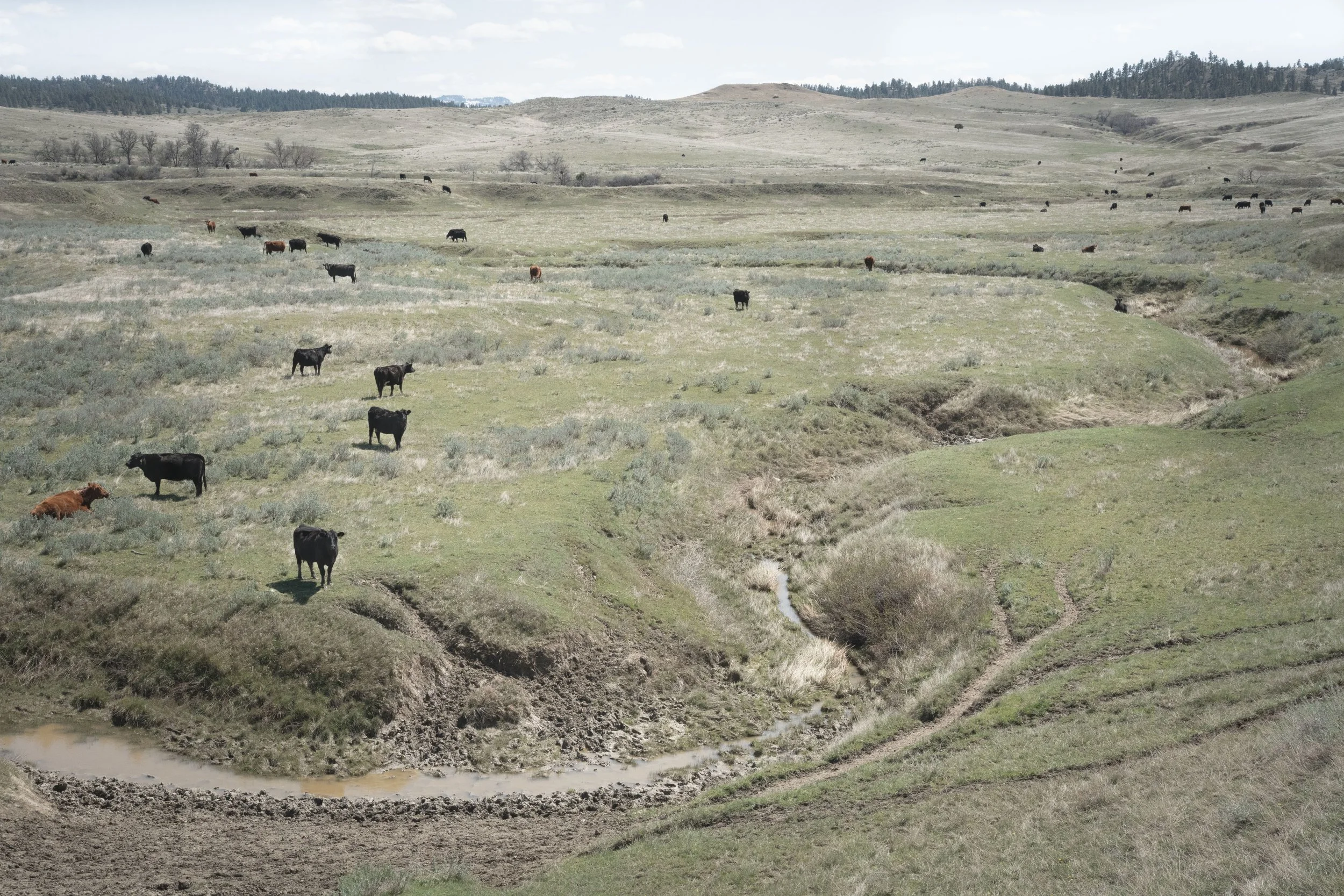
| Padlock Cattle on Wacey’s Land |
The Padlock Ranch operates on a massive 475,000 acres of land in Northern Wyoming and Southern Montana. While the exact ratio is not publicly disclosed, A significant portion of that land is on the Crow reservation. According to Native ranchers like Mike NotAffraid and Wacey RealBird, and cultural historic director Aaron Brein, they only own or lease maybe half of the land that their cattle graze on, likely much less.
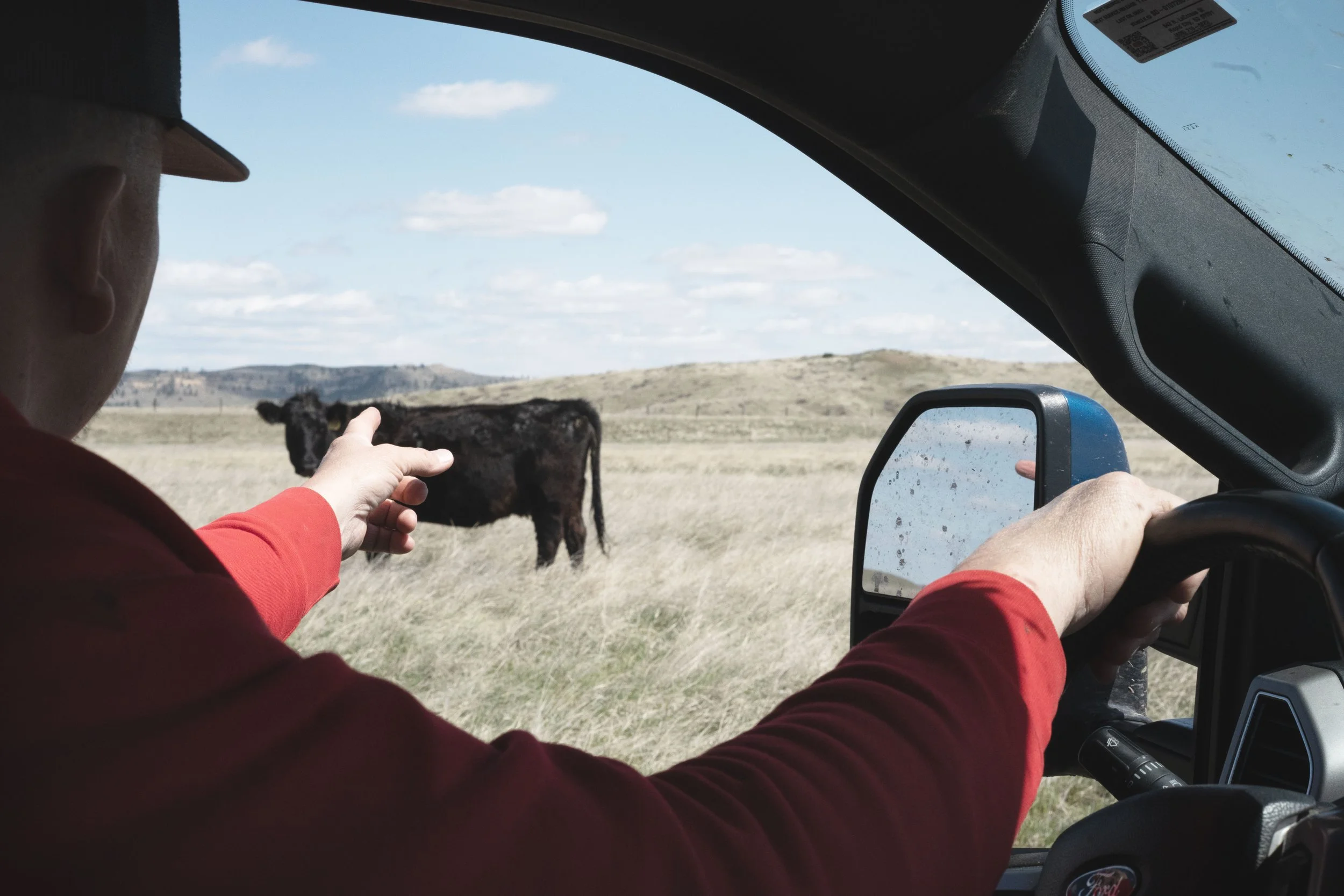
| Stolen Grass |
“They dump 900 head of cattle on their land that can only support maybe 125 head, and they know the cows come over here to drink our water and eat our grass”. Wacey explains that tribal ranchers can't afford to put up enough fence to keep the padlock cows out, and the BIA refuses to intervene. “If my cattle were on Padlock land, I would get a call from the BIA immediately… and they are supposed to be here for us”.
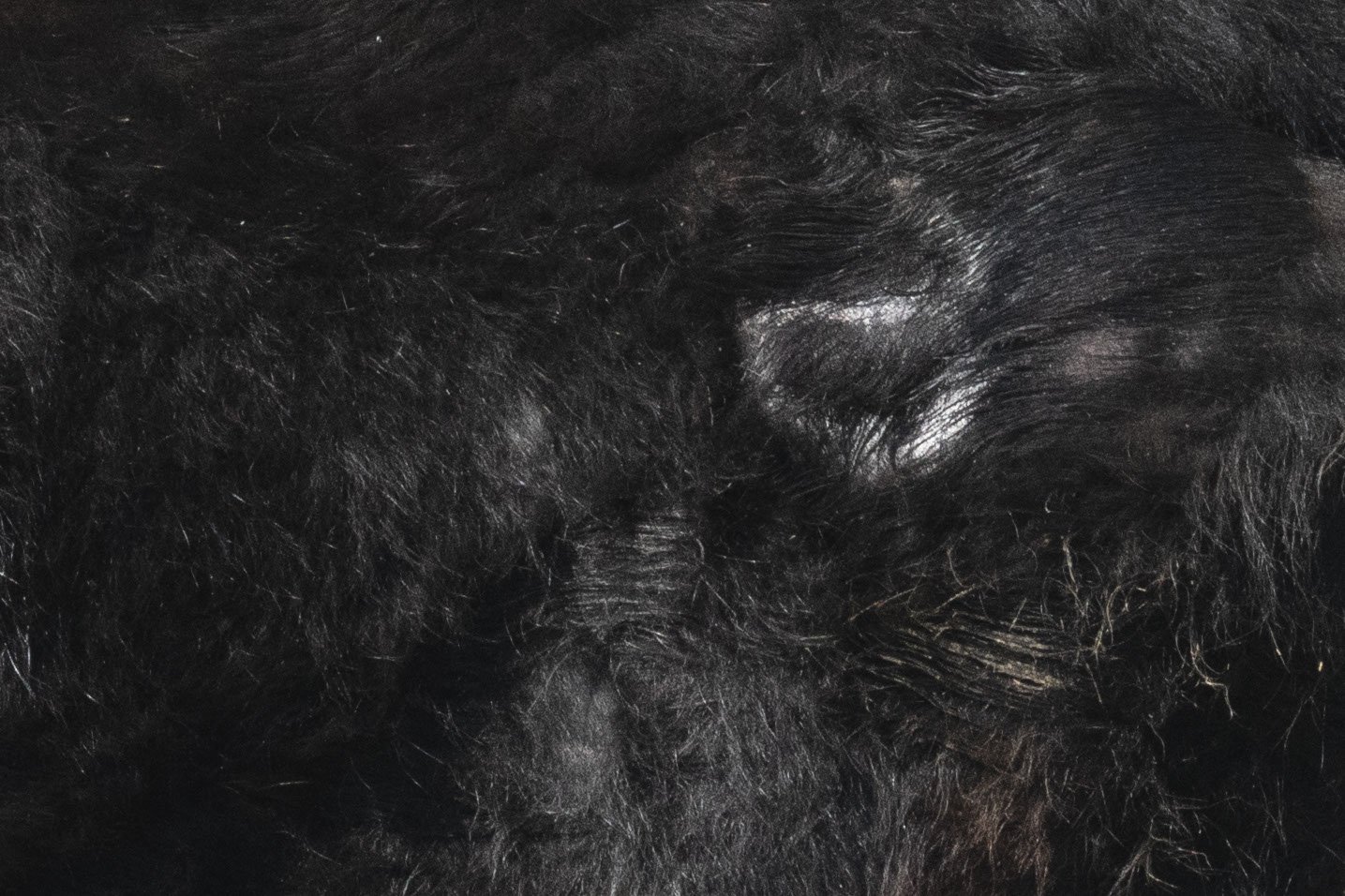
| Padlock Brand |
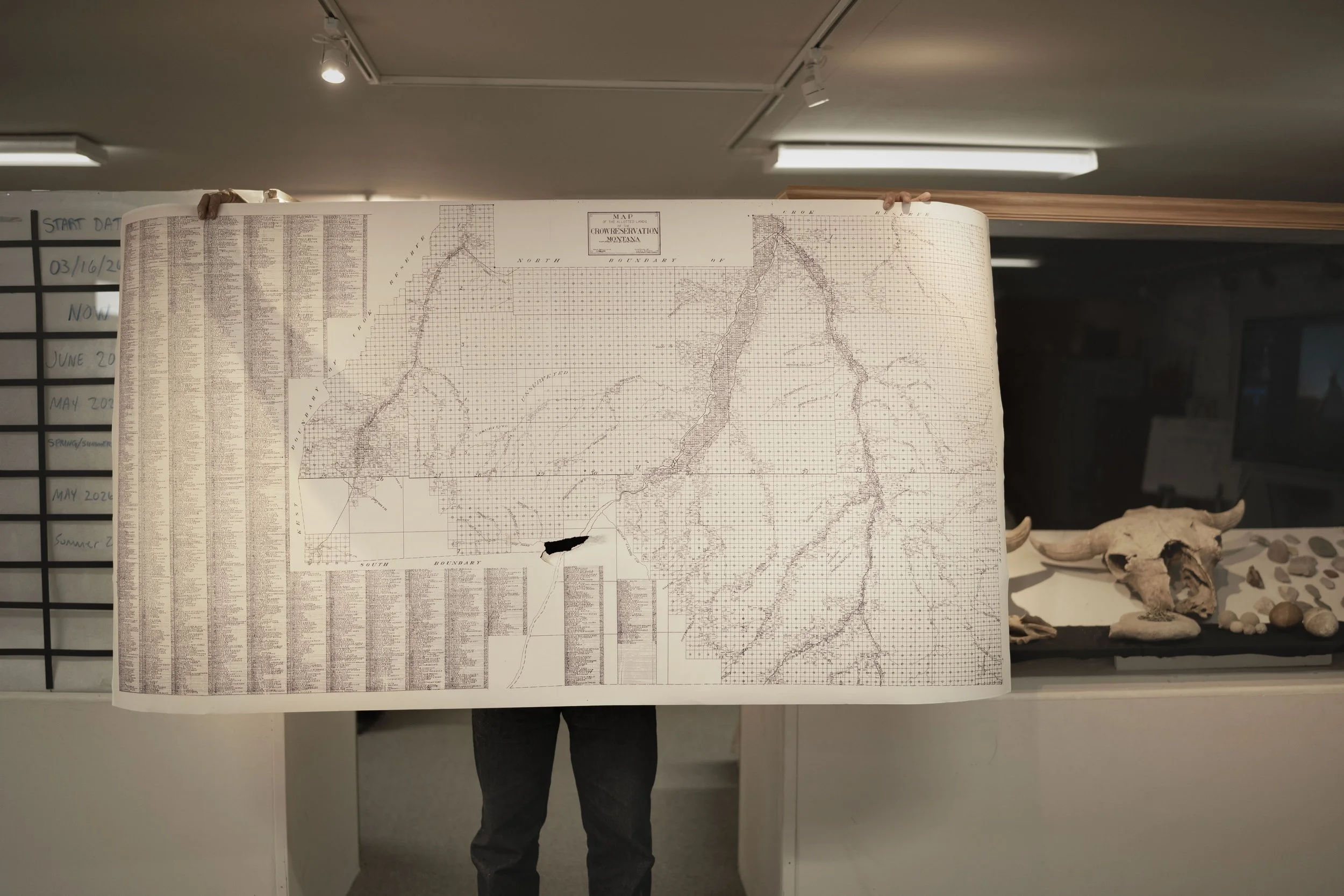
| Aaron Brien Holds Map of Allotted Reservation Land |
The Crow Act of 1920 broke up tribal land into allotments with excess land being opened to non-native homesteaders. This split up communally held tribal lands and advertised farmland irrigated by the Crow Irrigation Plan to non-native people. This checkerboarded land ownership, restricting the Crow’s access to hunting land and even areas of their own allotments. This type of land management is the reason that nonnative ranches like Padlock are able to exploit reservation land. “If tribal members can’t access their land without trespassing, how are they supposed to catch Padlock stealing their grass?” Aaron explains.
| Jet and Kelby |
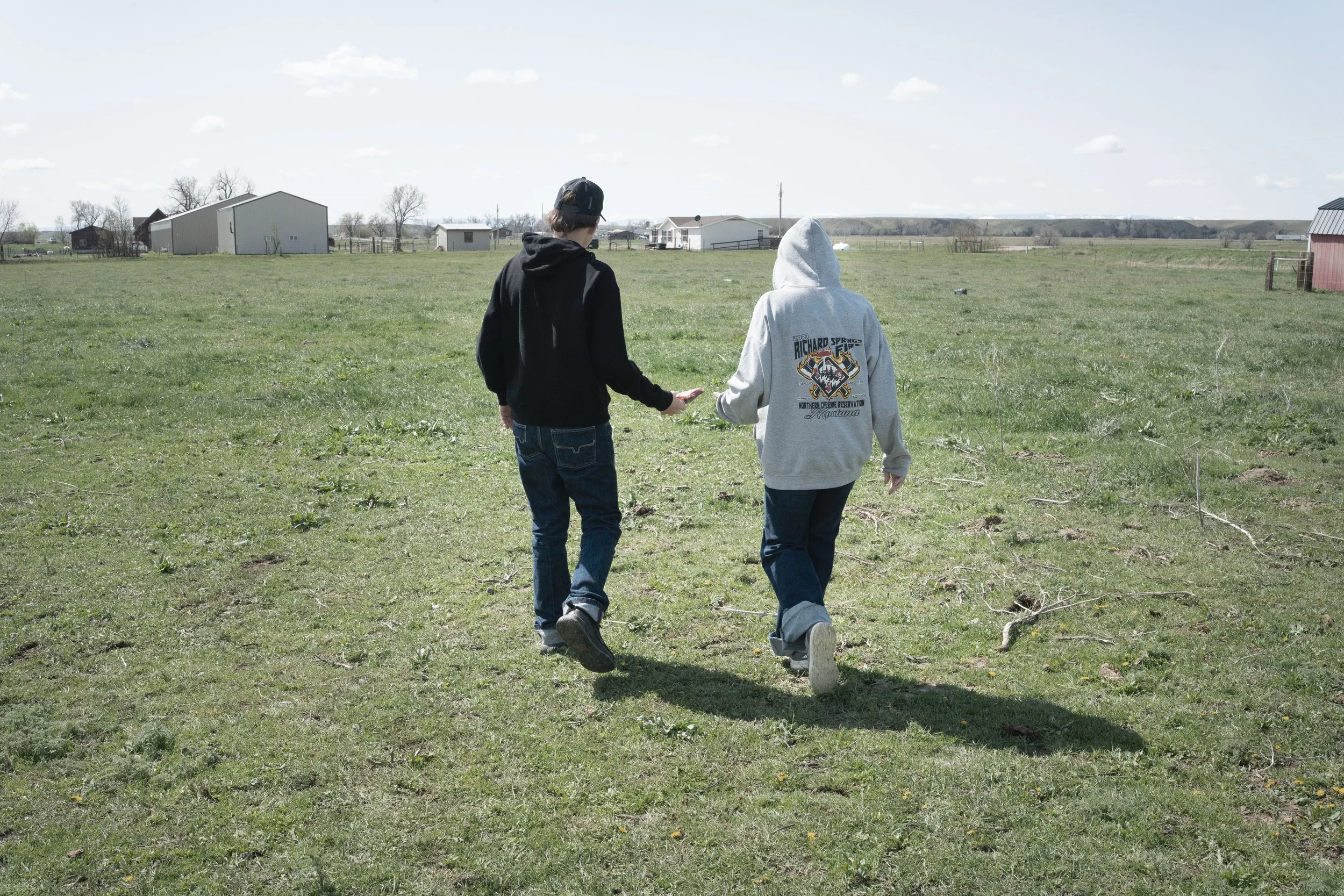
Wacey’s Girlfriend Kelby and his son Jet get into position to herd horses into a paddock.
| Padlock Land |
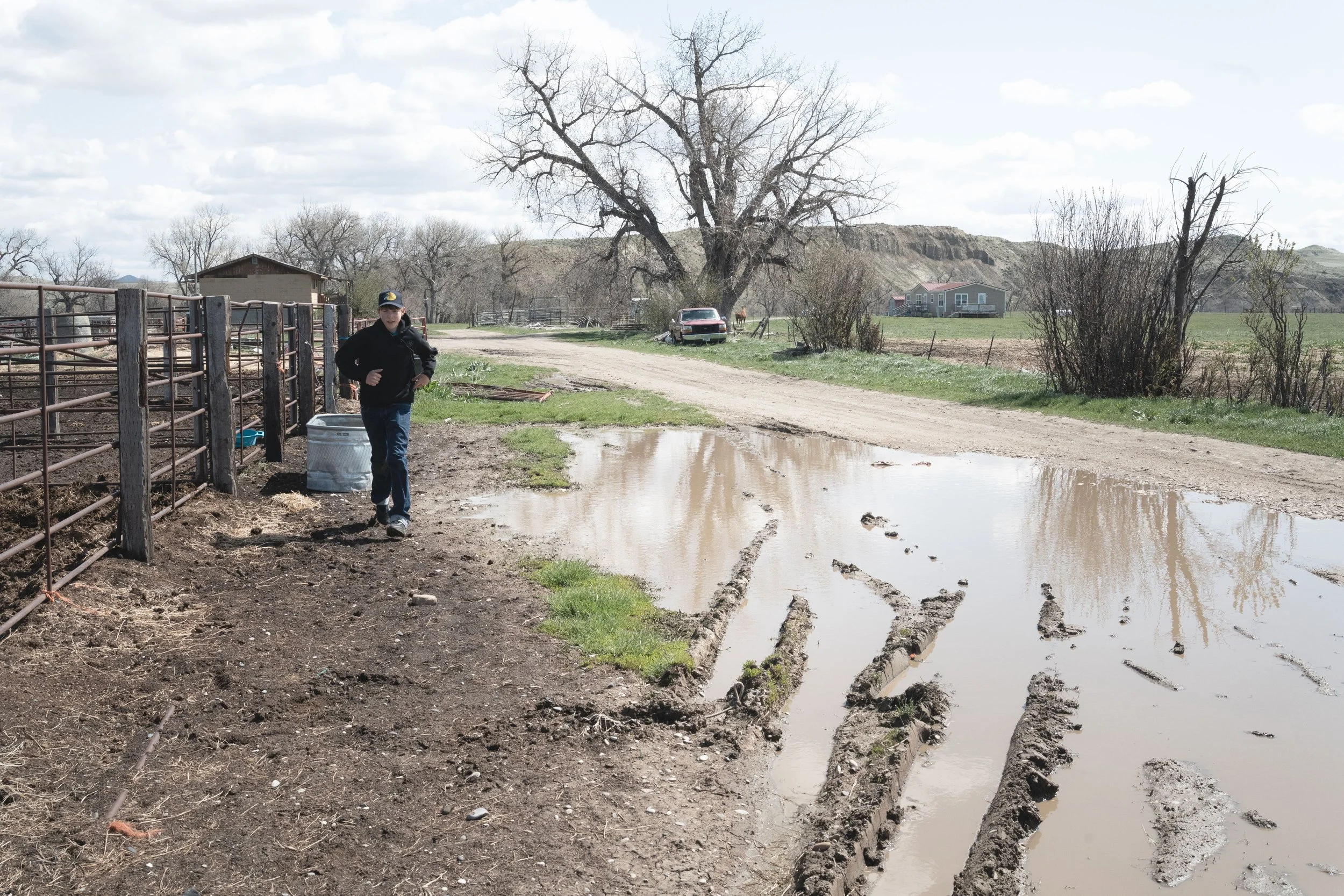
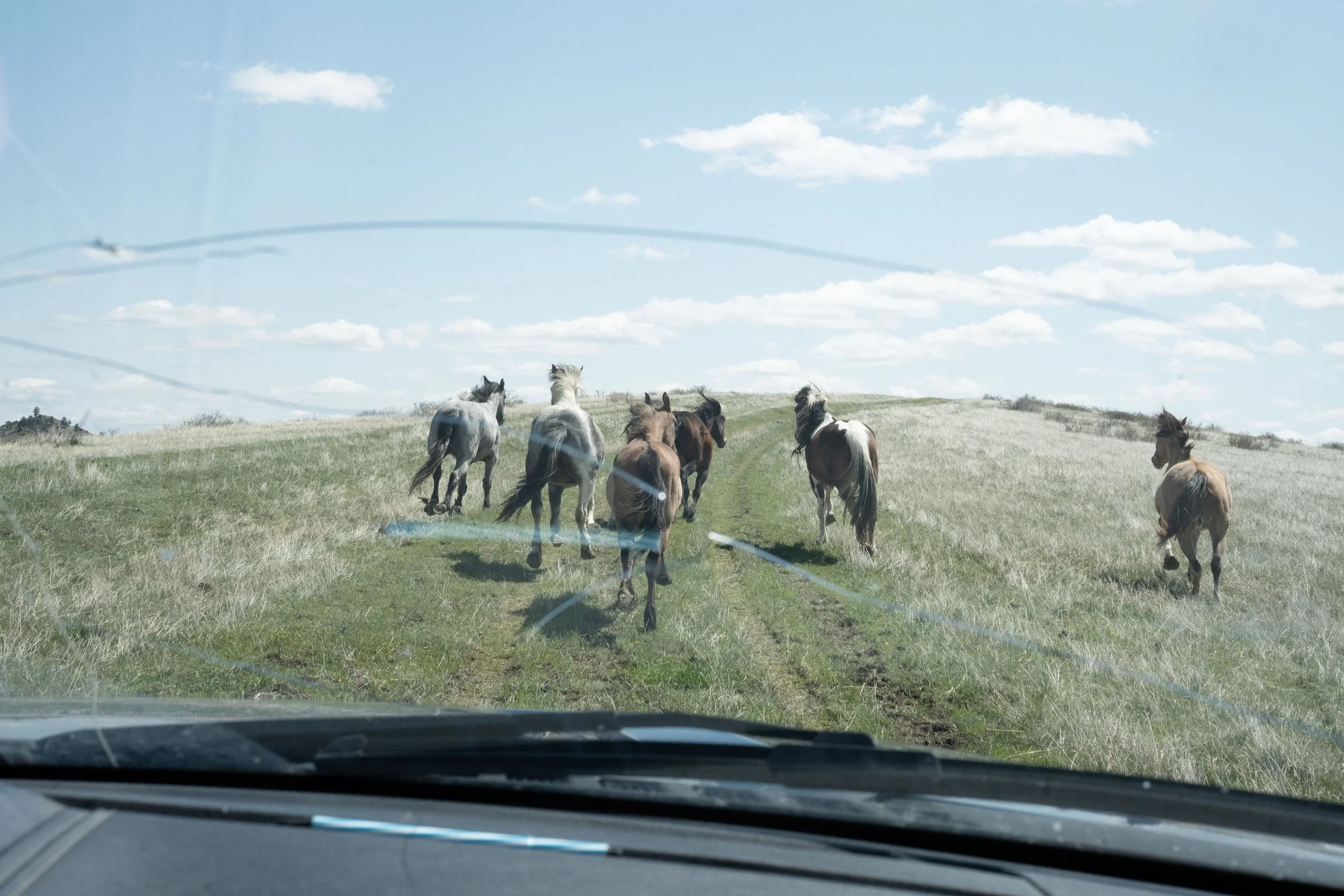
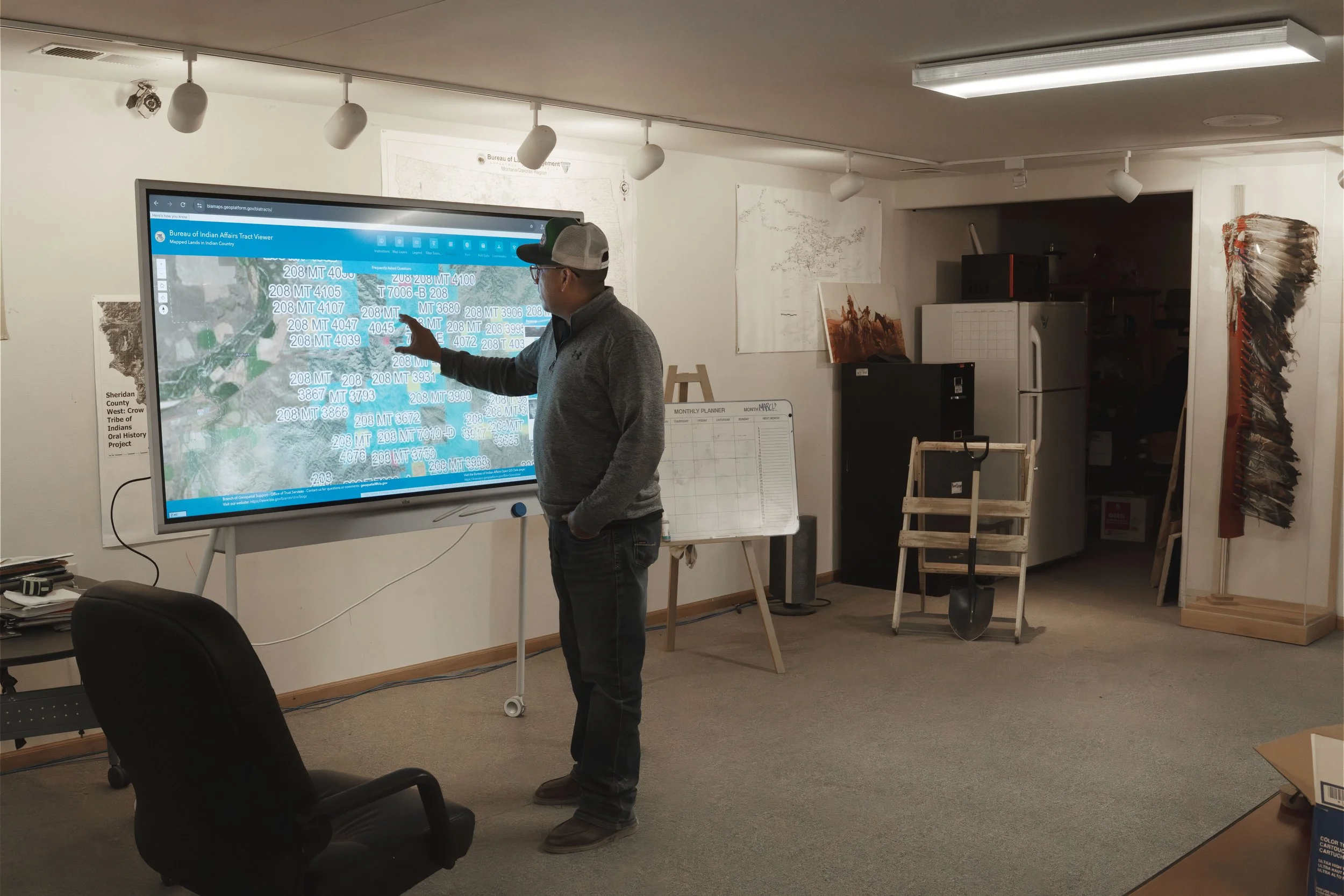
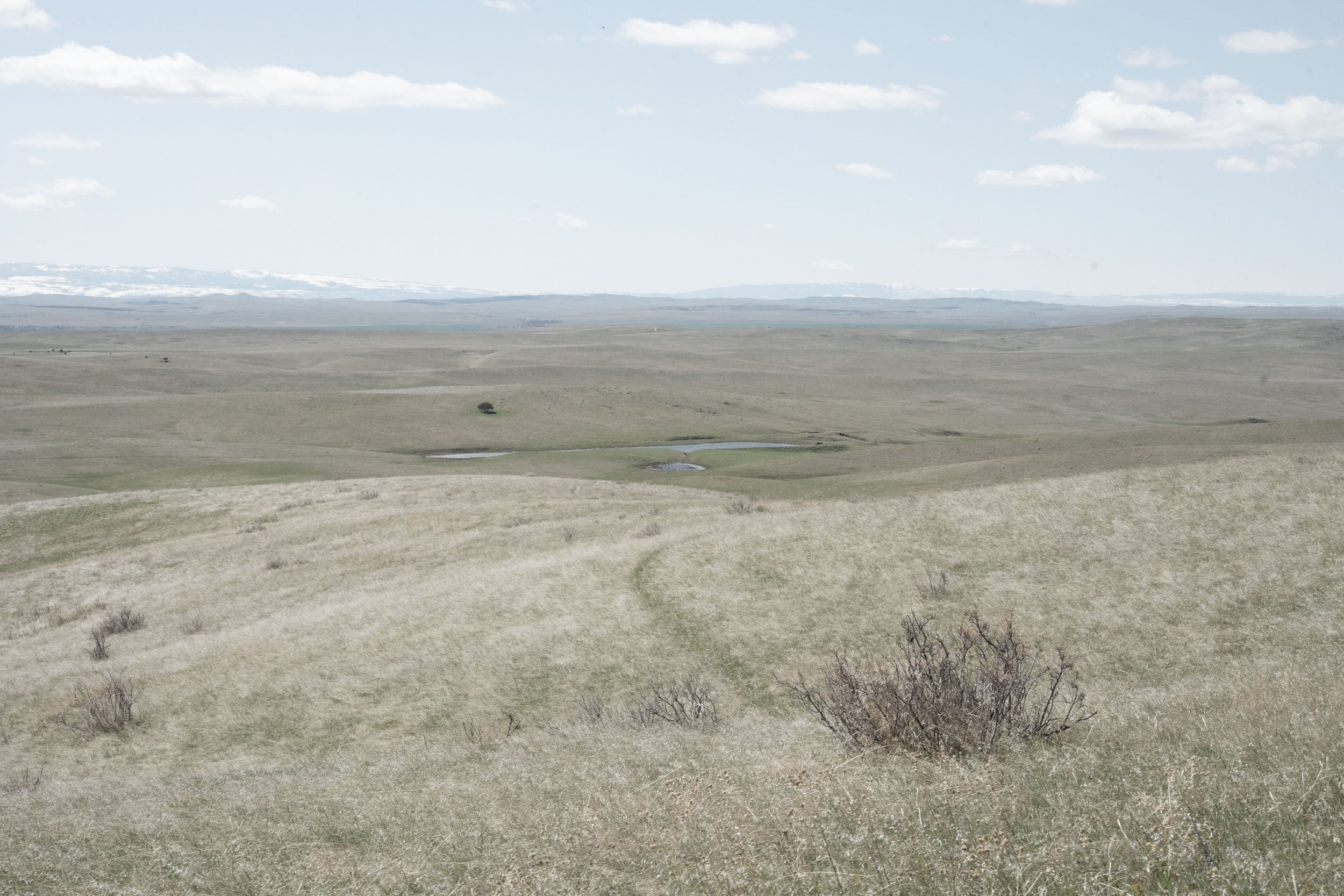
Aaron Bein looks at Padlock owned and leased land peppered throughout the reservation. Their cattle graze all the land in between too because there is no one out there to stop them. The branch of the BIA that is supposed to enforce trespassing like this is heavily underfunded and only has one vehicle for 2.3 million acres of reservation land.
| Mike NotAfraid |
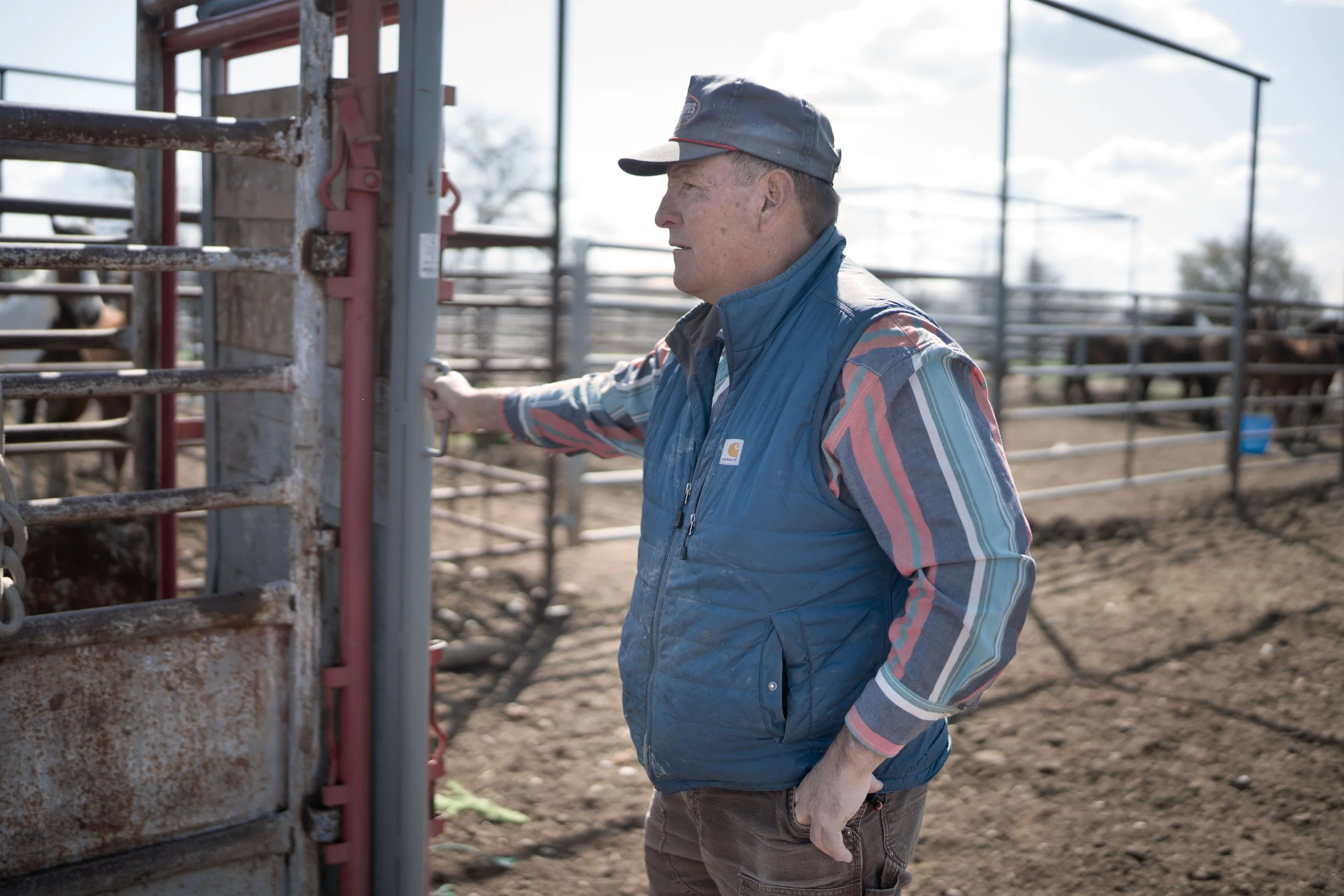
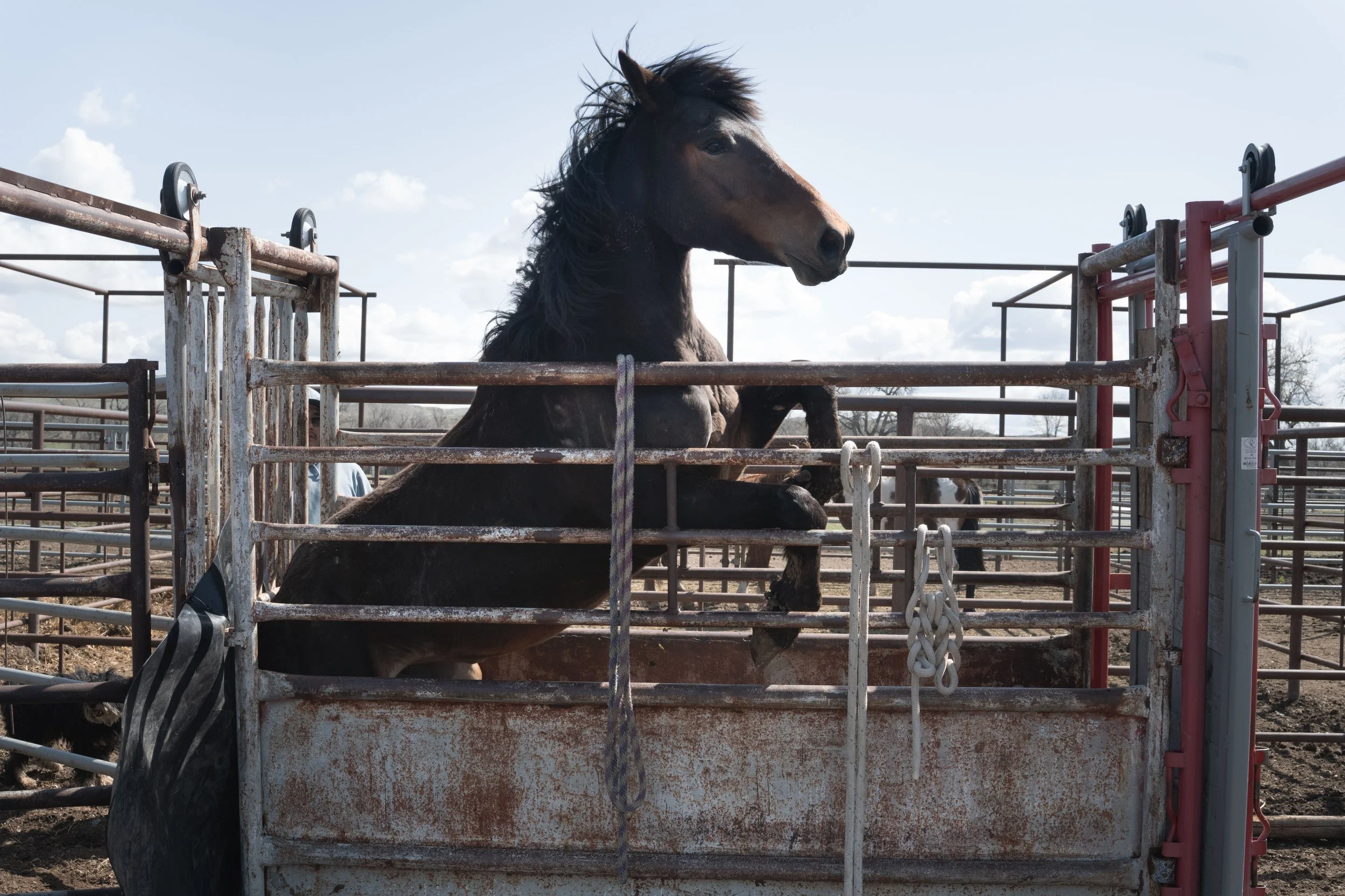
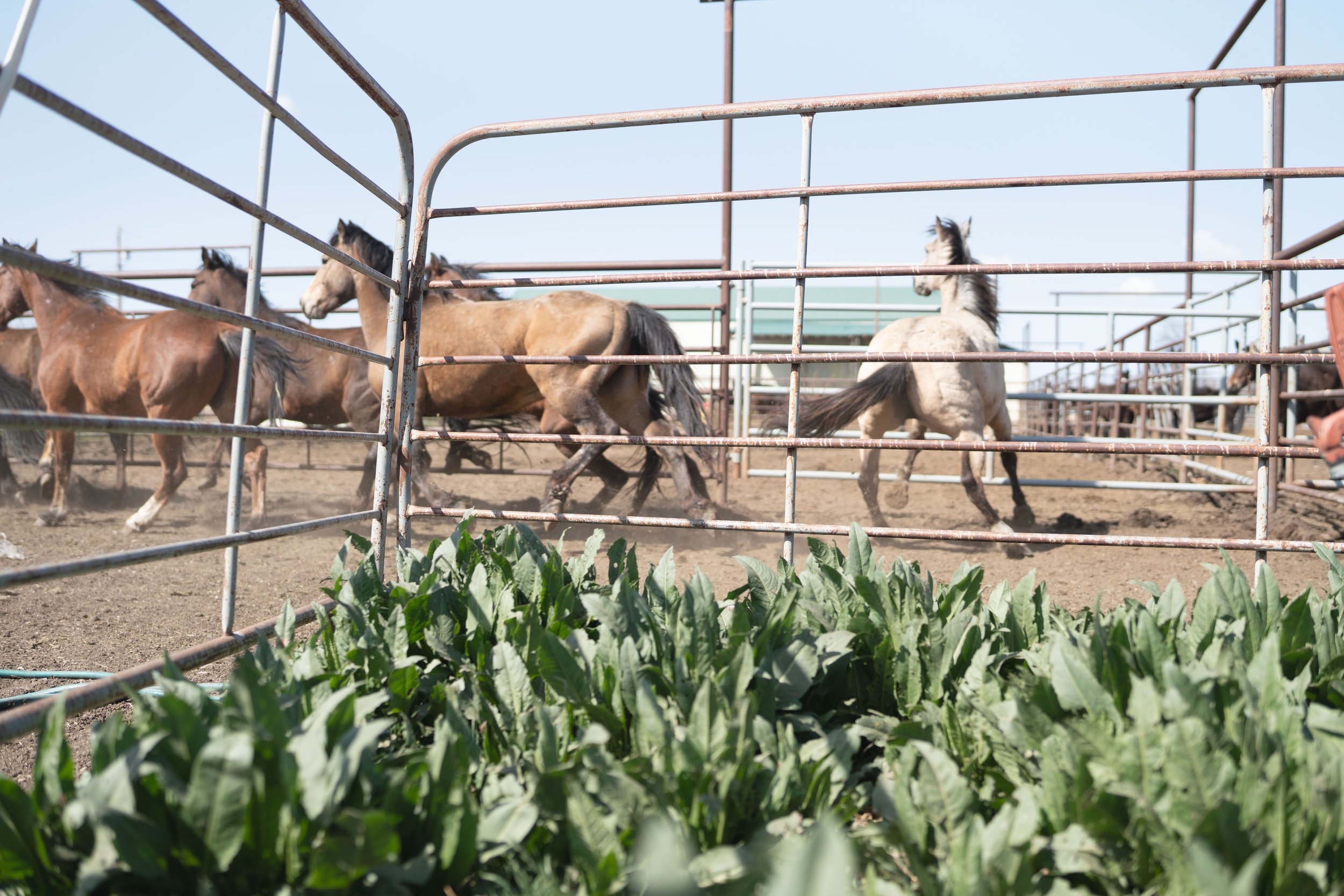
Mike runs one of the only functioning native ranches on the Crow reservation. He raises cattle, bucking horses, and grows hay on over 10,000 acres of land. Like Wacey, he is in constant conflict with the Padlock ranch, whose cattle roam free on tribally owned trust land. The padlock cattle devastate water sources and grass that Mike's cattle and horses depend on.
| Young Horses |
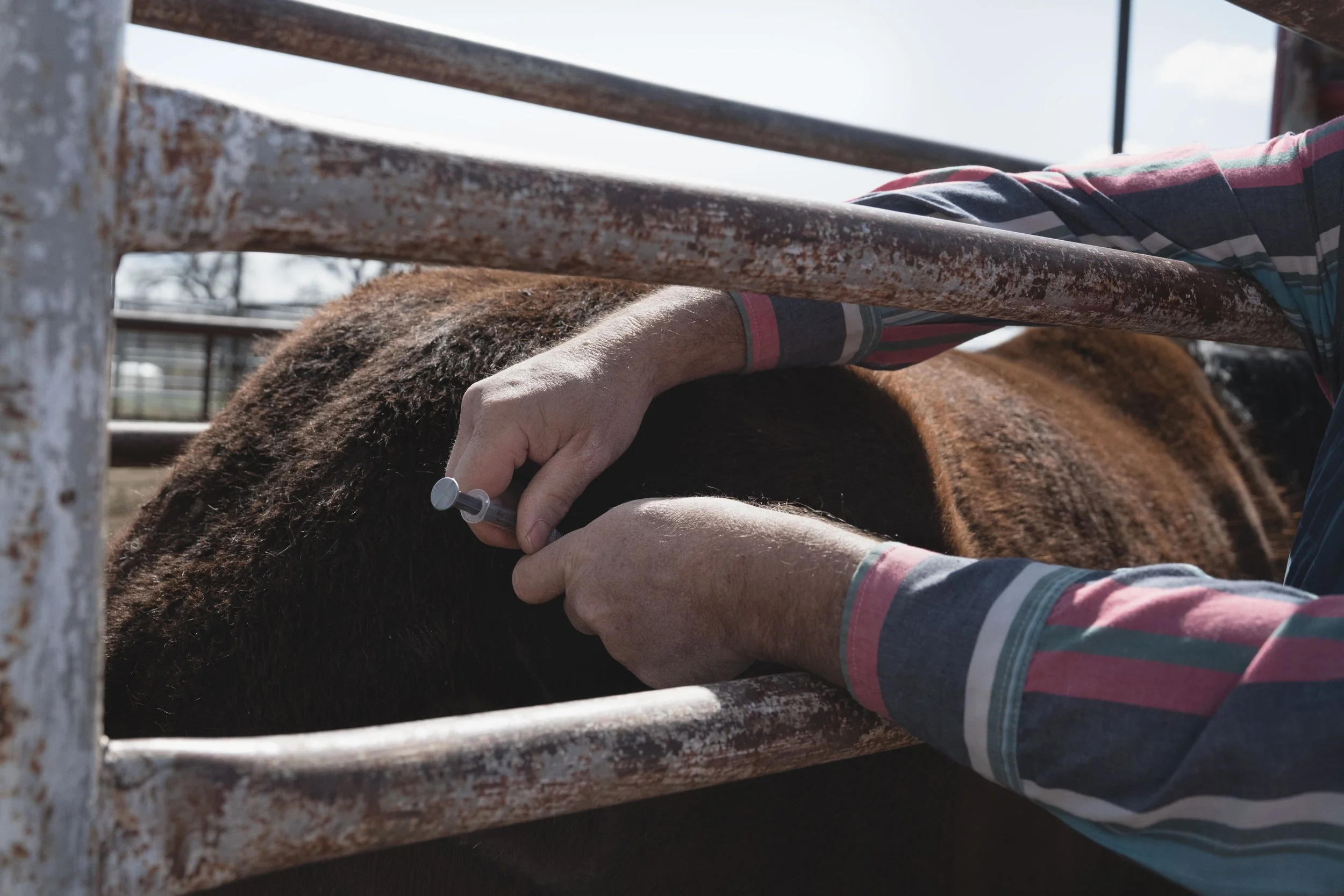
Mike NotAffraid administers birth control shots to young mares. When I asked why Mike said, “same reason you don't want a teenager to get pregnant, they are young and strong, and they have work to do.”
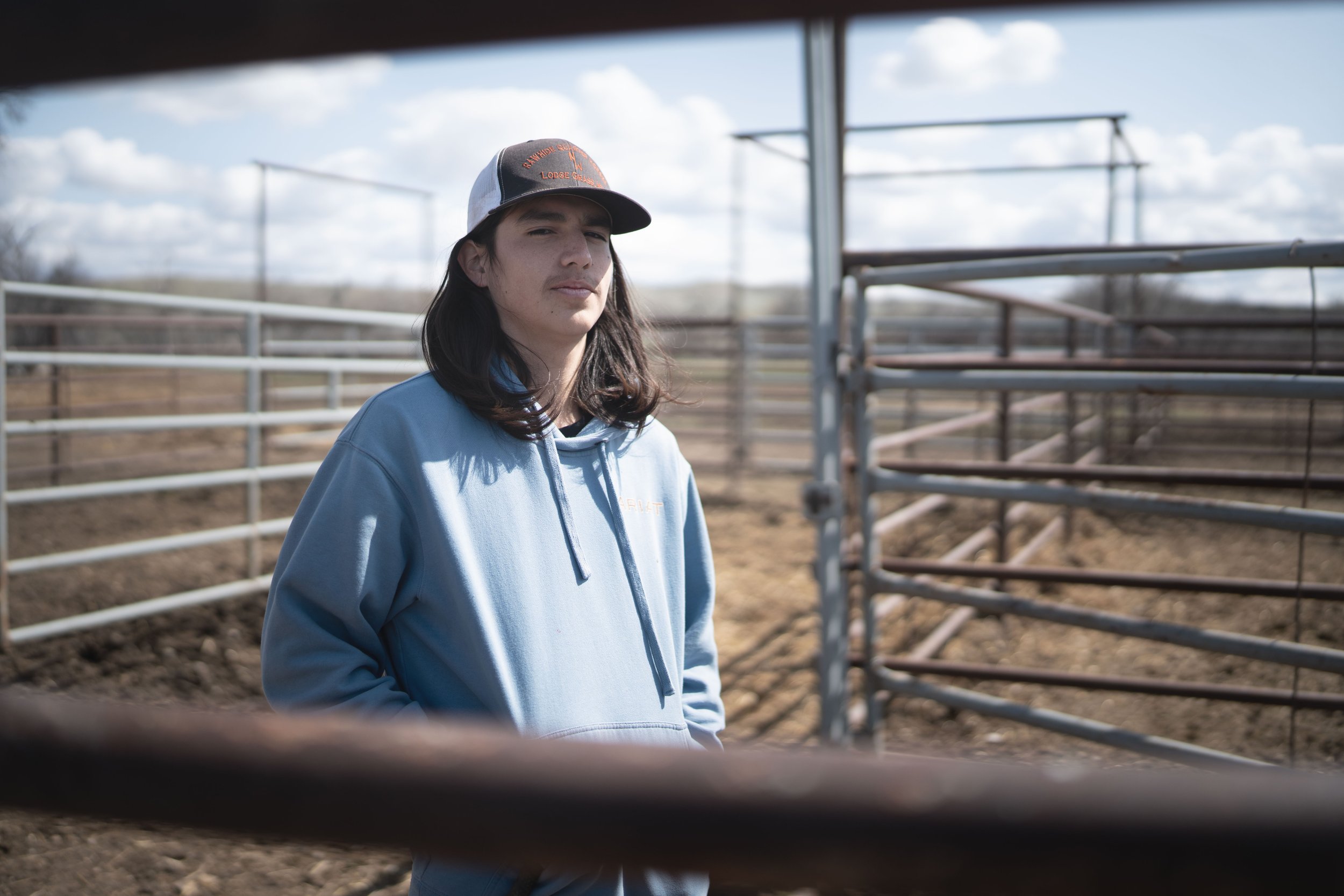
| Scotty BlackEagle, Ranch Hand for NotAfraid |
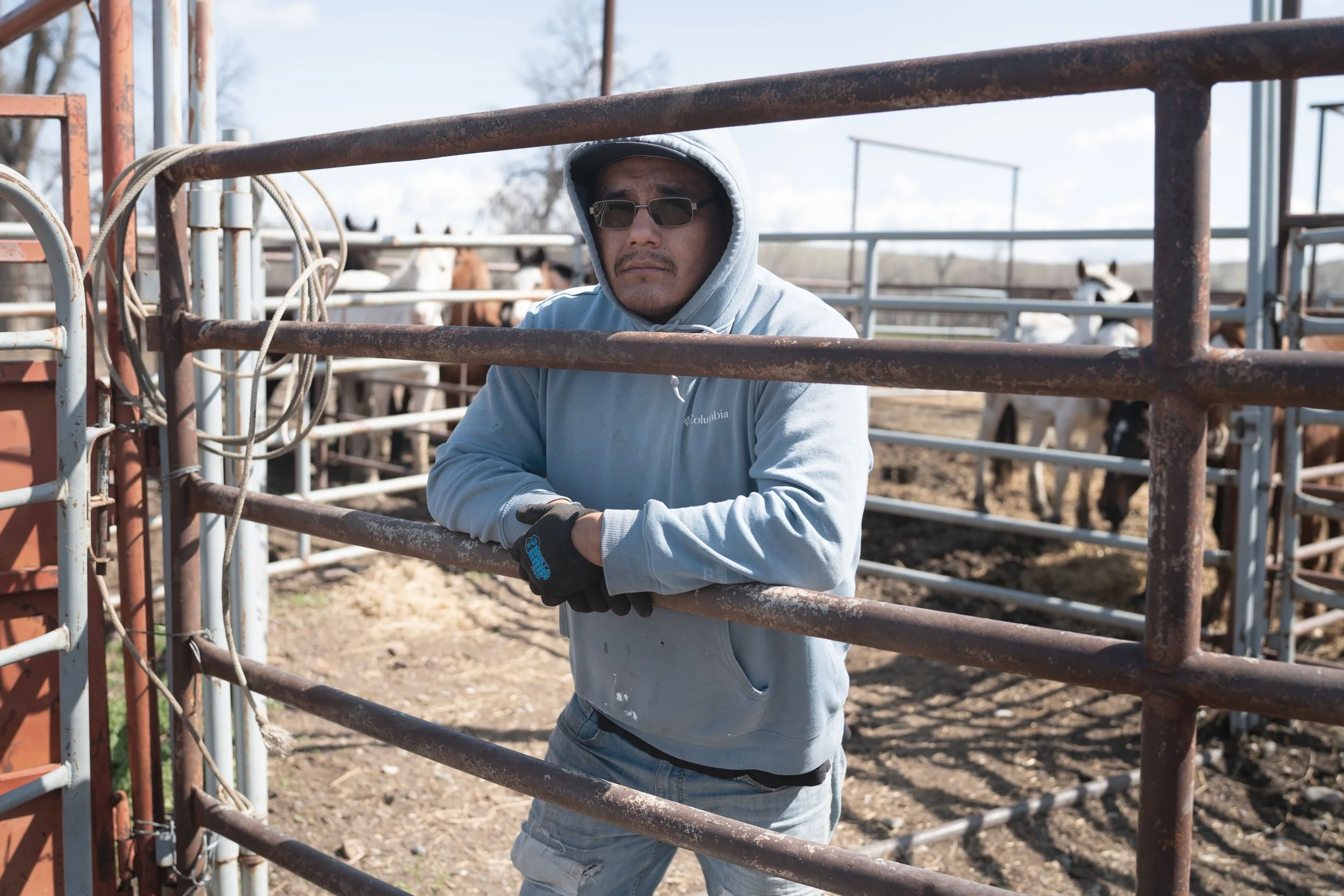
| Lane RidesHorse, Ranch Hand for NotAfraid |
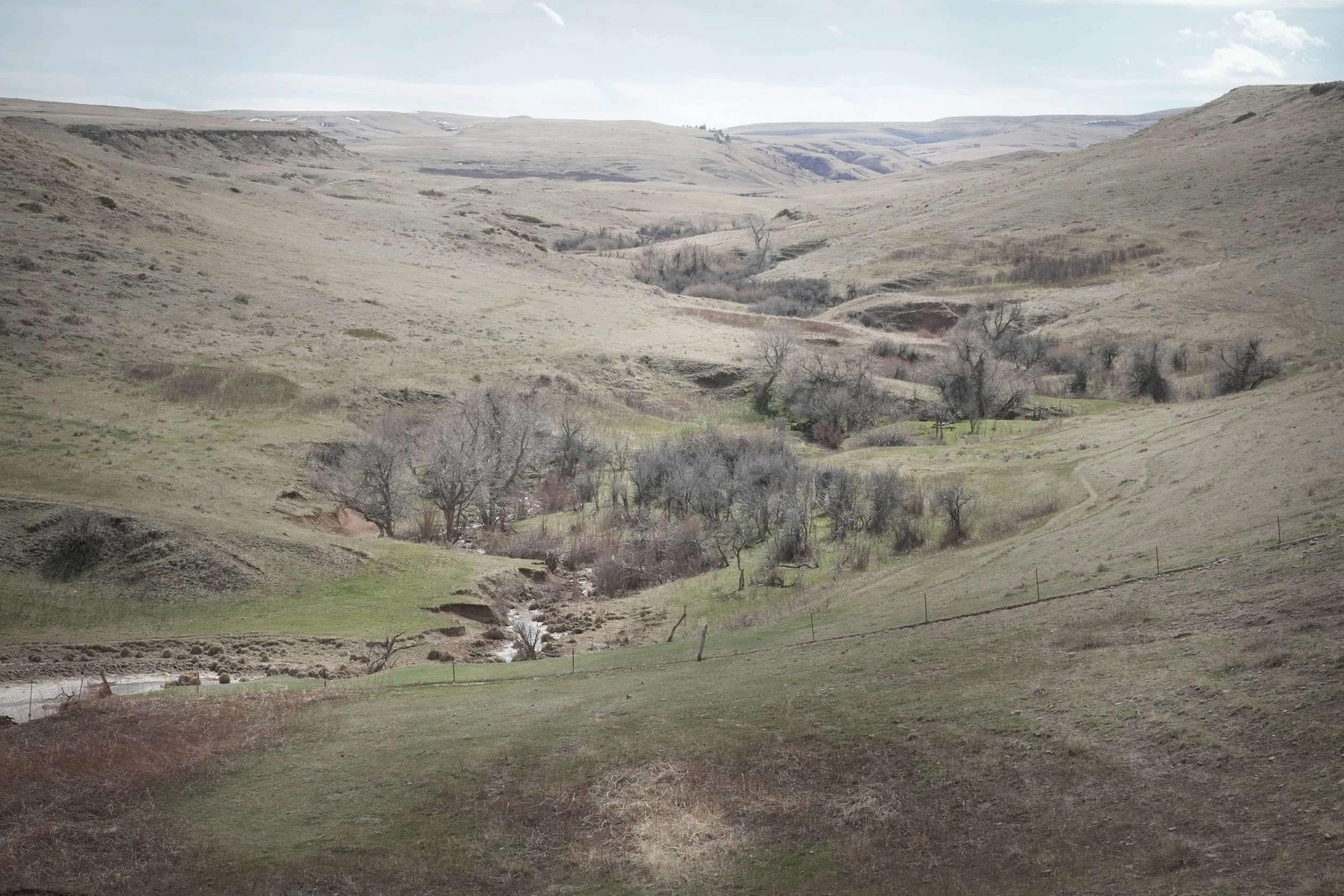
| Grapevine Ranch |
A non-native ranch near Fort Smith. Despite being on the reservation, Grapevine Ranch has individual water rights outside of Apsáalooke tribal control.
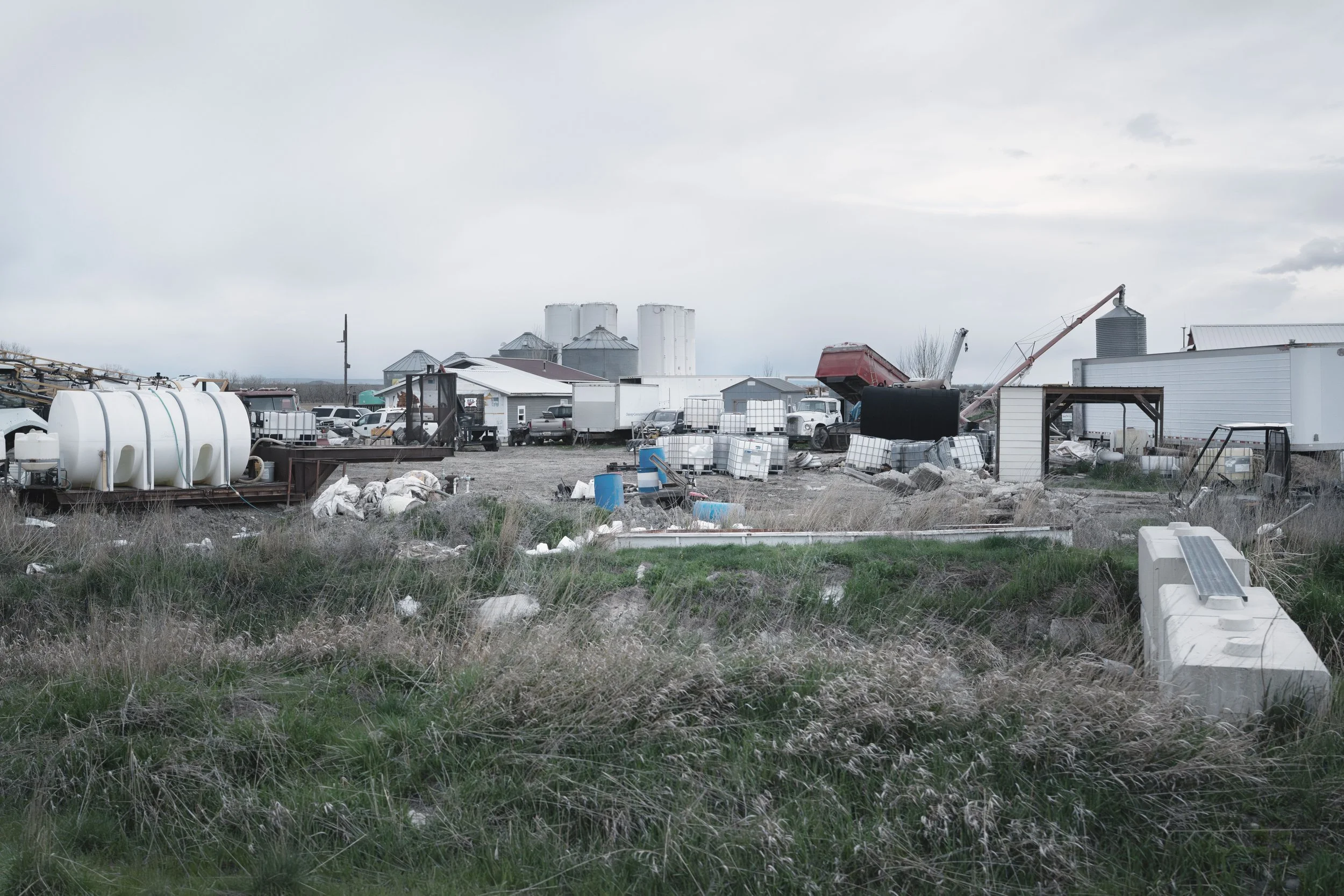
| Mennonite Farm |
The Crow Reservation sits at the center of a booming farming industry. According to USDA and Montana State University data, somewhere between a quarter and a third of Montana's 886,000 tons of annual sugar beet production comes from reservation land — alongside significant yields of wheat, hay, and barley. Yet nearly none of those farms are Native-operated. The disparity is even starker than in ranching. “If you were to drive around the reservation and guess what pieces of land were Native-owned and which ones were not based on infrastructure — chances are your guess would be right every time” Says Wacey.
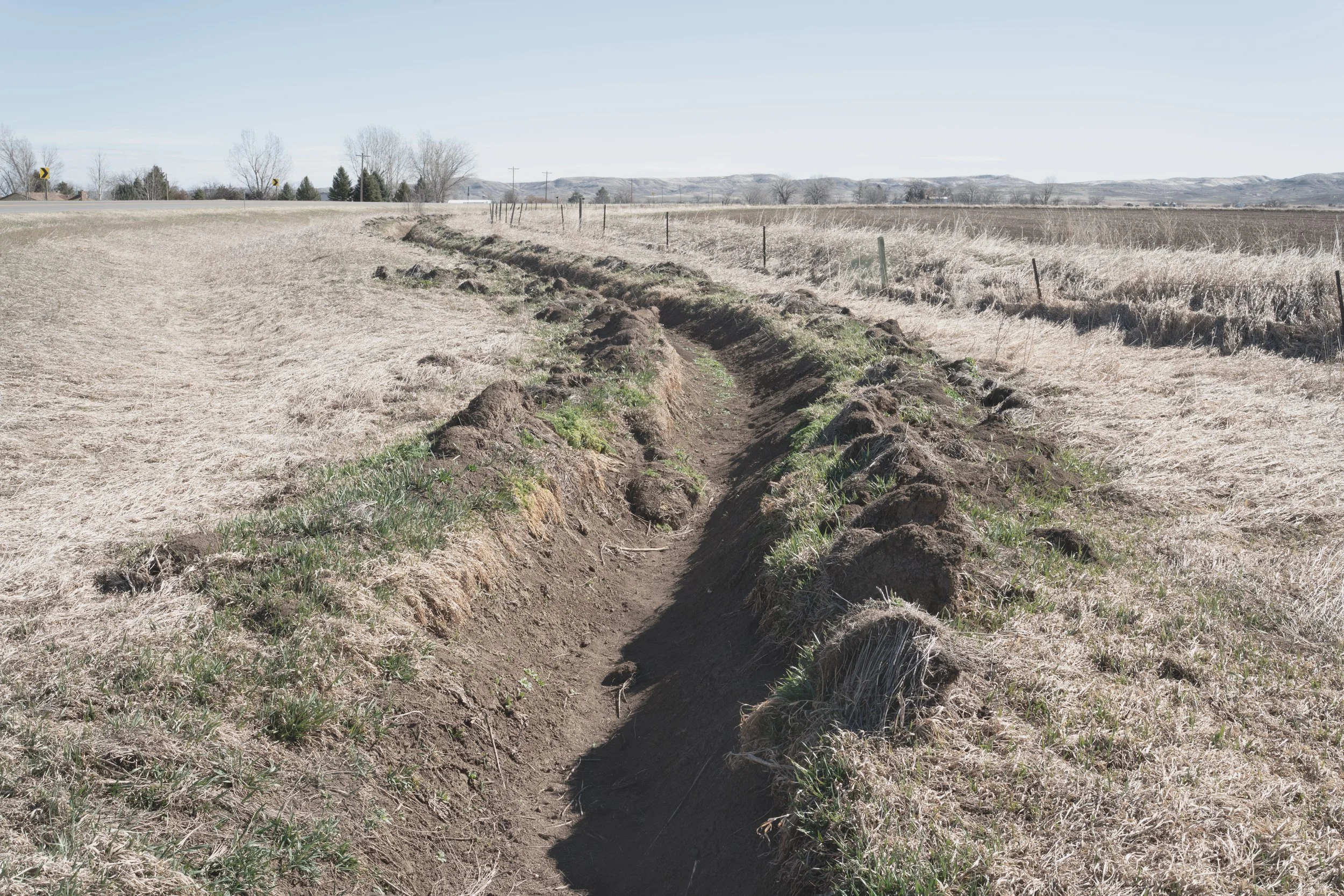
| Diversion Ditch |
A new ditch to divert water near Saint Xavior. According to Aaron Brein, it's likely illegal.